Fibrous plastering isn’t magic. It’s not some lost art only a handful can master.
But it is a craft—and like any craft, if you get the basics wrong, everything that follows will show it.
This first part is about foundations: the tools you use, the mixes you knock up, and the small details that separate a clean run from a mess on the bench.
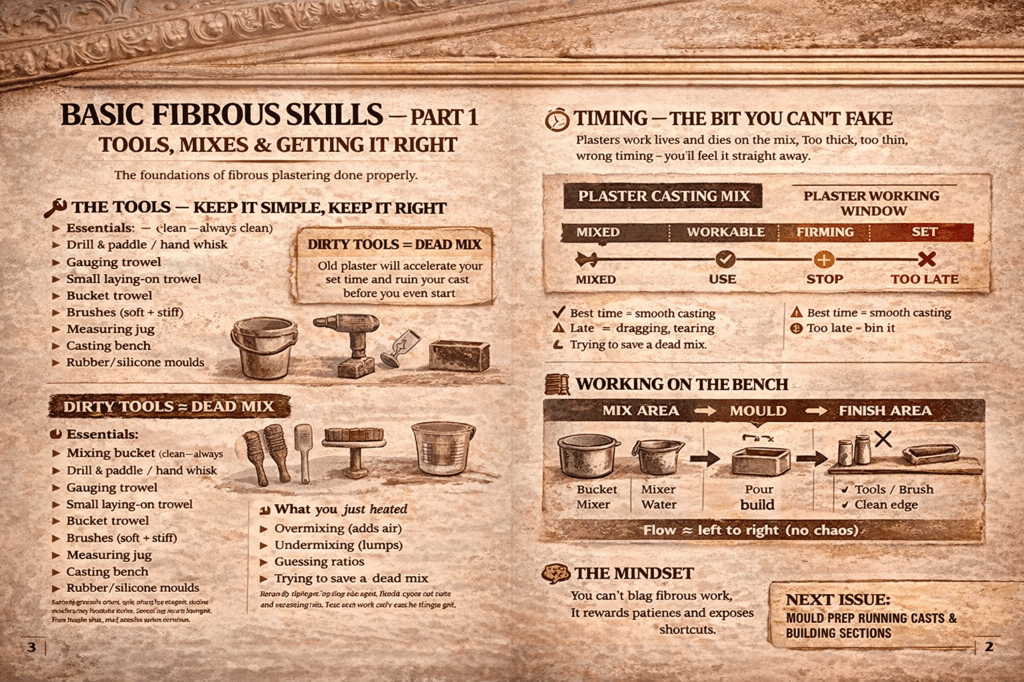
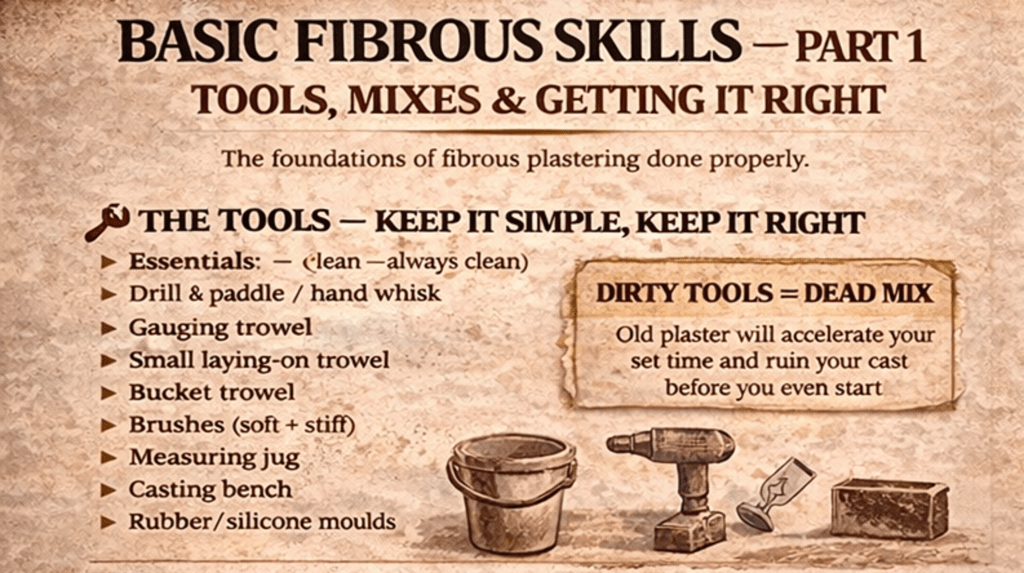
🔧 The Tools – Keep It Simple, Keep It Right
You don’t need a workshop full of fancy kit to get started. What you do need is the right tools, in good condition, and the discipline to look after them.
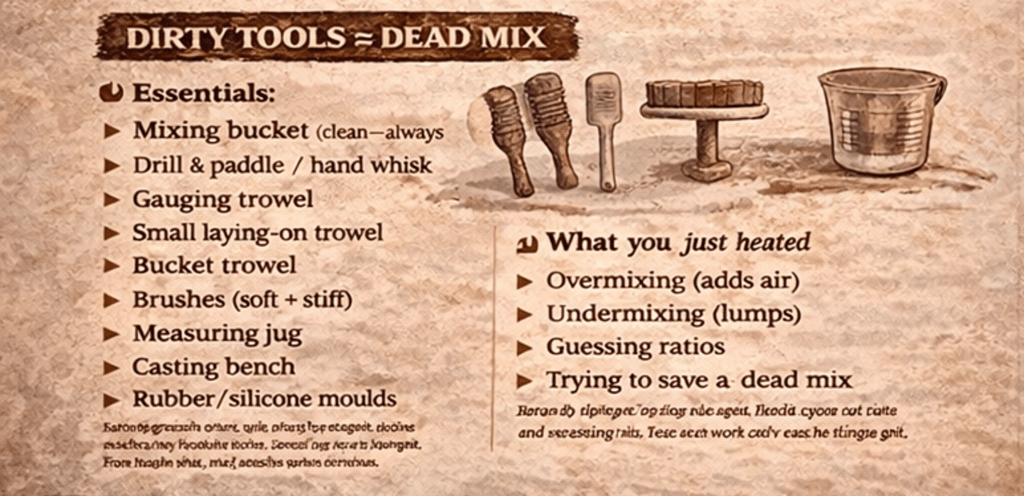
Essentials:
- Mixing bucket (clean—always clean)
- Drill and paddle or hand whisk
- Gauging trowel
- Small laying-on trowel
- Bucket trowel
- Brushes (soft for detail, stiff for cleaning)
- Measuring jug or bucket
- Timber bench or casting table
- Moulds (rubber or silicone)
That’s your starting point. Nothing complicated.
👉 The mistake a lot of lads make?
Turning up with tools full of old gear, half-set plaster, and thinking it’ll do.
It won’t.
Old plaster in your bucket or on your tools will drag your set time forward and ruin your mix before you’ve even started. Clean tools aren’t a nice-to-have—they’re part of the job.
🧪 The Mix – Where It’s Won or Lost
Fibrous work lives and dies on the mix. Too thick, too thin, wrong timing—you’ll feel it straight away.
🎯 Standard Casting Mix (Baseline)
- Fine casting plaster
- Clean water
- Optional: hessian reinforcement (for strength)
Method:
- Water first, always
- Sprinkle plaster into the water (don’t dump it in)
- Let it soak for a minute
- Mix steadily until smooth—no lumps, no air
What you’re aiming for is a smooth, creamy consistency—not runny, not stiff.
Think:
“It should flow, but still hold body.”
⚠️ Common Mix Mistakes
- Overmixing – pulls air in, weakens the cast
- Undermixing – lumps, weak spots, poor finish
- Guessing ratios – leads to inconsistency
- Rushing it – fibrous work punishes impatience
👉 Every mix should be repeatable. If you can’t repeat it, you can’t control it.
⏱️ Timing – The Bit You Can’t Fake
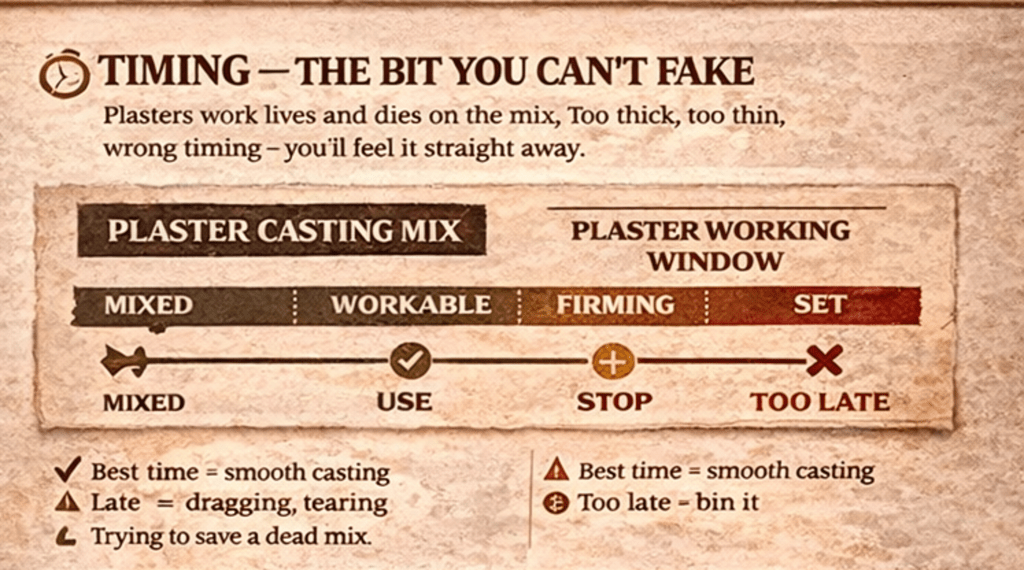
Plaster has its own clock. You don’t control it—you work with it.
You’ve got a working window from when it’s mixed to when it starts to pull. Miss that window and you’re fighting it.
- Good fibrous plasterers:
- Know their set time
- Adjust for temperature
- Stay organised on the bench
- Poor ones:
- Mix too much
- Panic when it starts to go
- Try and “save” a dead mix
👉 Once it’s going off, it’s going off. Don’t mess about—bin it and start again.
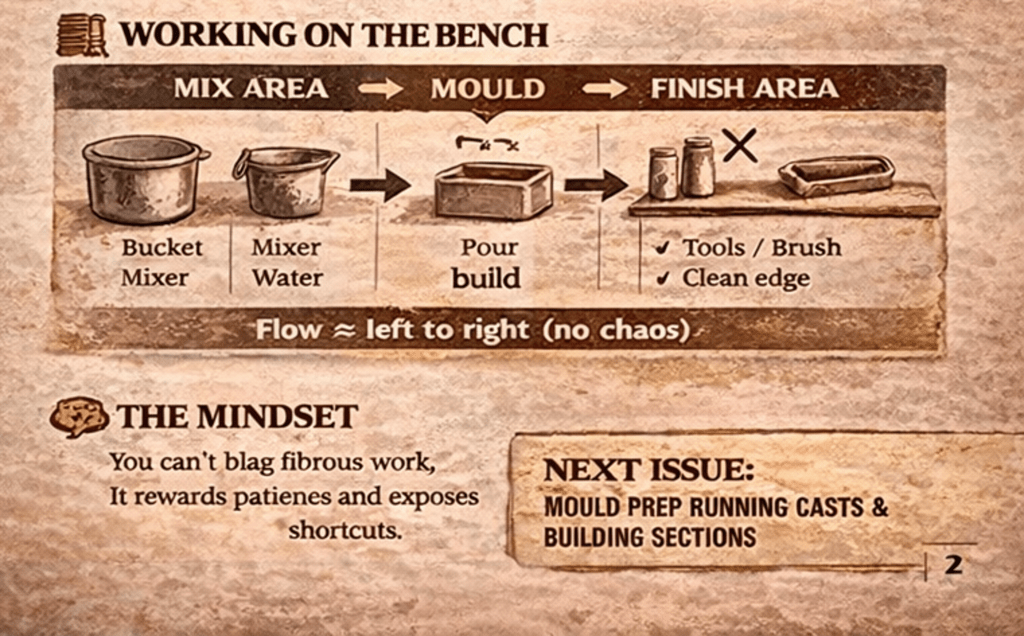
🧱 Getting It Right on the Bench
- This is where it all comes together.
- Before you even touch plaster:
- Mould clean and ready
- Tools laid out
- Mix planned
- Reinforcement cut (if needed)
No scrambling around mid-cast. That’s when mistakes happen.
- Key habits:
- Work steady, not rushed
- Keep your edges clean
- Watch your thickness
- Don’t overload the mould
Fibrous is about control—not speed.
🧠 The Mindset
You can’t blag fibrous work.
- It rewards:
- Patience
- Consistency
- Attention to detail
- And it exposes:
- Laziness
- Poor prep
- Guesswork
If you take shortcuts here, it’ll show in the finished piece. Every time.
🔚 Final Word
- Get your tools right.
- Get your mix right.
- Respect the timing.
- Do that, and you’ve already done half the job.
Next time we’ll get into:
👉 Mould prep, running casts, and building up your sections properly
Because that’s where the real craft starts to show.