
Boys on the Blackstuff
It was half past midnight on New Year’s Day, 1987. I sat there thinking about what kind of year lay ahead. I had a wife, a mortgage, and two kids. What I didn’t have was work.
My trade was plastering—mainly domestic jobs, which I enjoyed—but things always dried up over Christmas. Normally, by the first week in January, I’d have work lined up. Not that year. By the 3rd of January, nothing had come in, so in desperation I started ringing round my contacts.
I was offered price work on a new build in Greater Manchester by a local firm. The rates were low: 50p per metre for plasterboarding, £1 per metre for skimming, and £1.75 for floating and setting solid walls. That included fixing all beads and loading the houses yourself.
I was paired with another plasterer. The days were long, the work hard, and the cold biting—January that year was brutal. The boss came every Friday to measure up and pay us for what he approved, always knocking us back on something. After 30% tax, we were clearing about £125 each a week. Diabolical money, but it was all there was. I stuck with it until the site finished and I was laid off.
Then, one evening, I spotted an advert in the local paper:
Plasterers required in London – £275 per week, weekly pay, plus overtime, transport and accommodation provided.
“Wow,” I thought, and rang the number. The site manager explained they were refurbishing large Victorian houses in Ladbroke Grove, converting them into flats. They only hired lads from up North. A coach would pick us up from the bus station, take us to London, and we’d live on site. Minimum forty hours a week, with overtime available.
It sounded like Auf Wiedersehen, Pet—that TV series about British builders working abroad—except we were heading south, not to Germany.
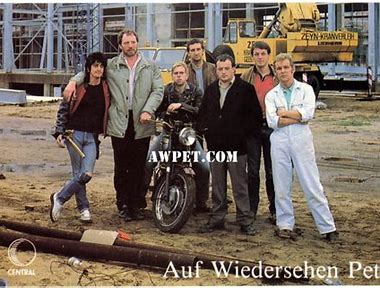
That Monday morning my wife dropped me at the bus station. Along with about thirty other builders, I boarded the coach. I didn’t know a soul. On arrival, the six of us starting that day were shown our digs—a loft. Problem was, half the roof was missing for the conversion work. Our first night we slept under a tarpaulin. Not too bad—until dawn, when pigeons started flying around our “room.”
Tuesday was my first full day. Determined to make good money, I worked flat-out. By 6 p.m. I’d boarded and skimmed the ceiling of an extension, floated and set the walls—everything finished. I was proud. Off to the pub for some Guinness (“the black stuff”) and to meet my new mates.
But my effort hadn’t gone unnoticed. Halfway through the evening, a big joiner loomed over me.
“If you do that again,” he said, “I’ll break your fucking arms.”
“What?” I asked.
“You heard me. We don’t work like that down here. Slow down, or you’ll be in hospital.”
Strangely enough, my speed vanished after that.
The London work settled into a routine. The lads were canny with overtime. The foreman left at 6 p.m., so everyone would book two hours’ extra pay, then head straight to the pub. We called it “going out on the black”—meaning work boots straight to the bar, dinner of egg, bacon, and chips, then pints until closing at 11 p.m., often later in lock-ins. Then we’d stumble back to the loft, crash out, and wake up at 7:45, nursing hangovers, ready to repeat it all again. Showers? Only on Fridays before going home.
The house often turned into a makeshift boxing ring after a few drinks. Banter all day would spill into the pub, then into punches.
One warm summer night, after too many pints, I crashed into bed. Around midnight, nature called. The toilets were two floors down. “Sod that,” I thought, and lifted the tarpaulin to relieve myself. I forgot, however, that directly below—three floors down—was the site manager’s bedroom, window wide open in the heat.
My “efforts” hit the sill, bounced… and landed on him.
Moments later: “WHO THE FUCK HAS BEEN PISSING OUT THE WINDOW?!” he roared. He stormed into our loft. I pretended to be asleep, head under the covers, trying not to laugh.
Next morning, he was still raging. The lads teased him mercilessly: “Anyone piss on you this morning?” He vowed to kill the culprit. But no one grassed me up—loyalty runs deep.
A few days later, when he’d cooled off, I owned up. “It was me. I was blathered.”
He laughed. “Don’t do it again.”
And I didn’t.
So the months rolled on—work by day, black stuff by night, and a rough, hard, unforgettable life on the London sites.
 Lath and Plaster