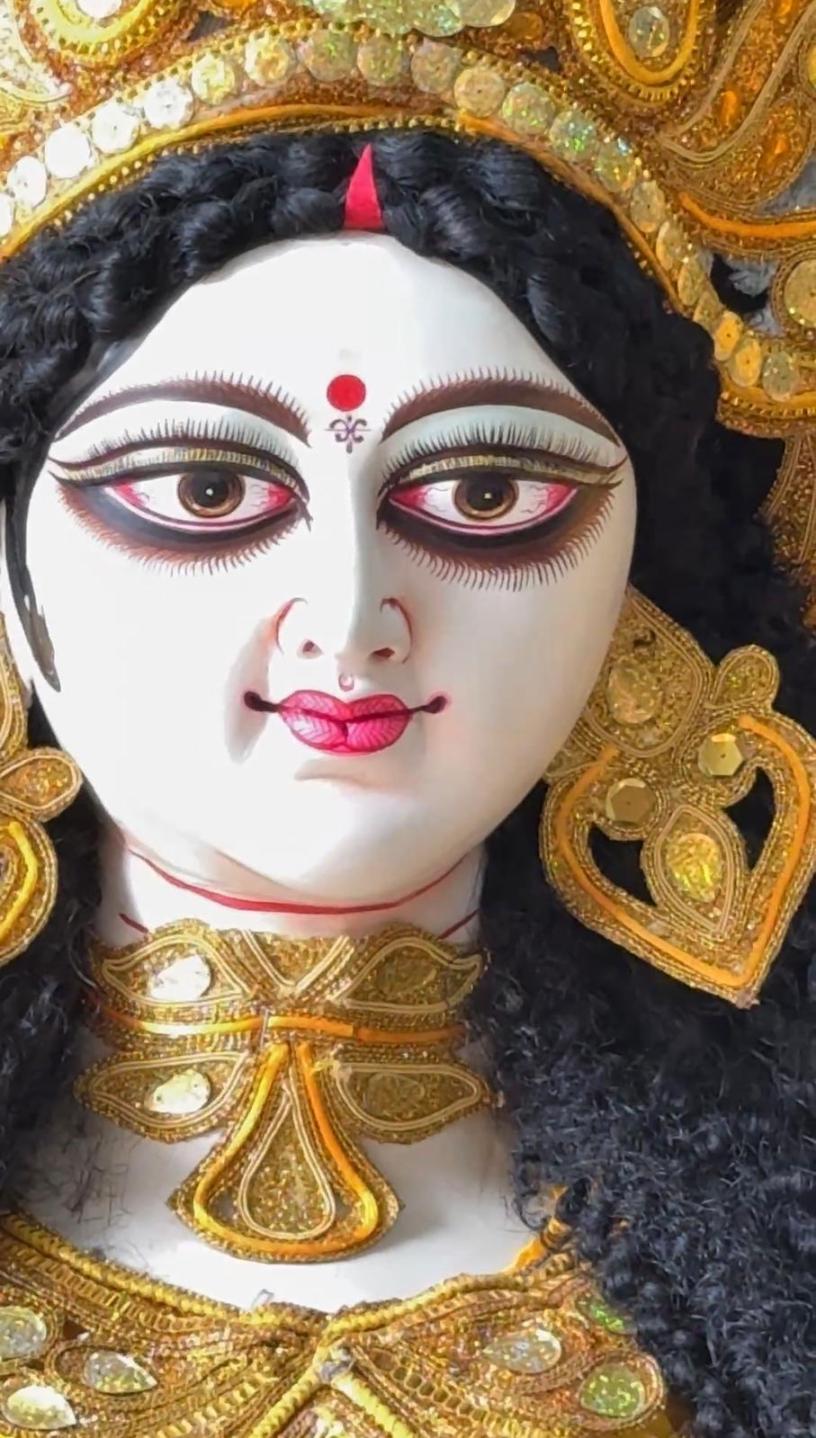
The process of creating this festival idol from unfired clay follows craft techniques passed on from generation to generation, relying almost entirely on natural materials and the skilled craftsmanship of Artisans.
The beginning
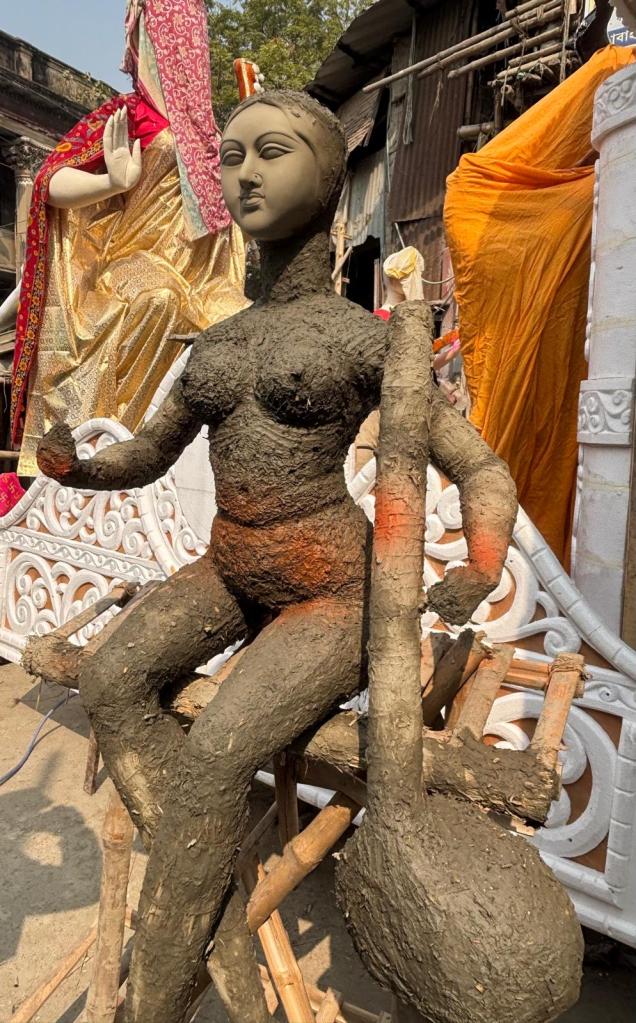
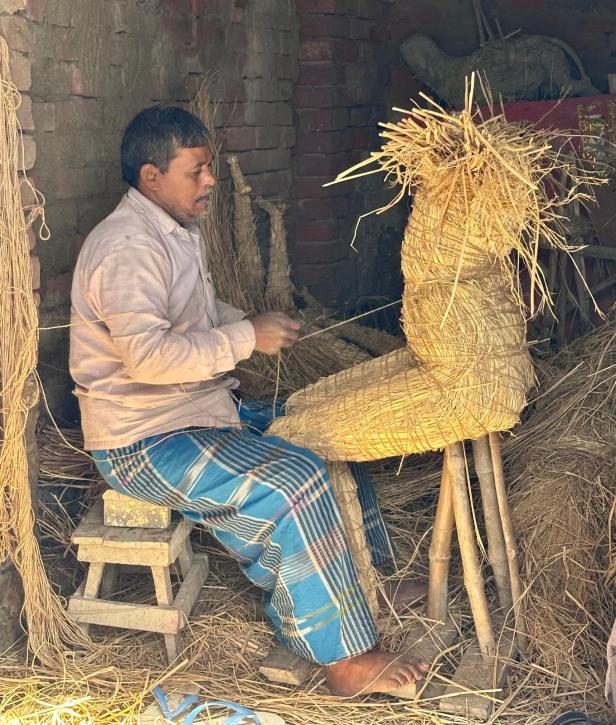
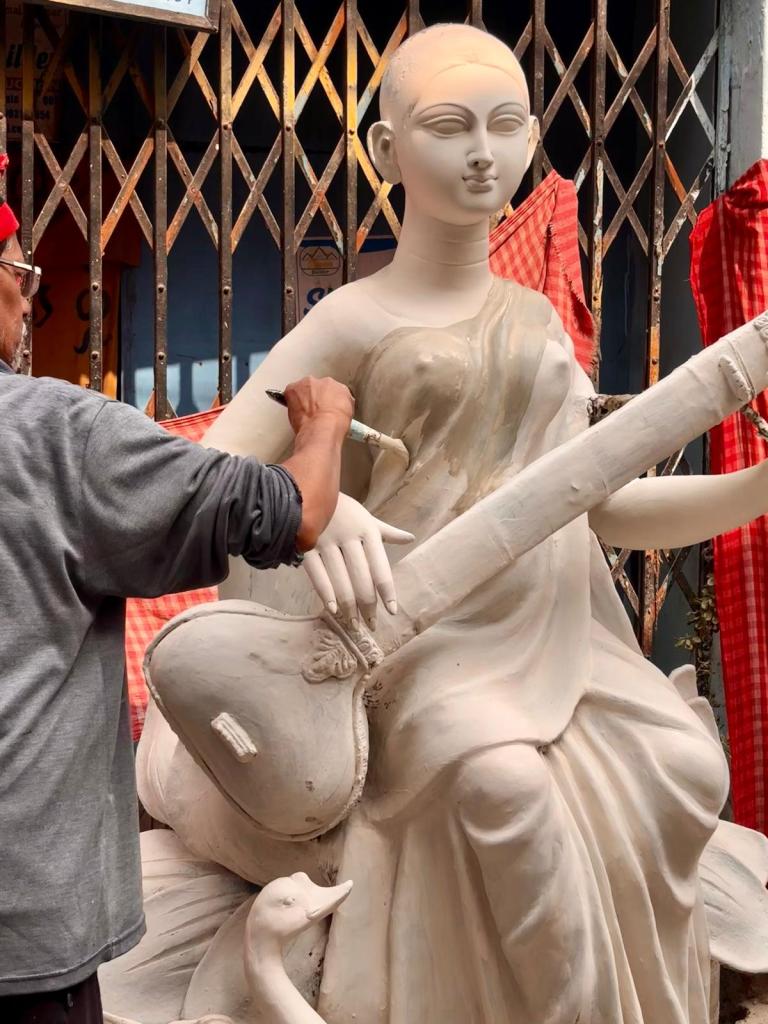
Everything begins with a light internal structure made from bamboo sticks and pieces of wood. This frame sets the idol’s basic proportions, pose, and balance of the idol. Once it’s built, bundles of straw are tightly tied around it to add volume and give the clay a solid background. Getting this stage right is critical; it lays the foundations of how the finished figure will look and stand. River clay is then applied in several coats. The first rough layer usually has chopped straw mixed in; it builds up the main body shape and bulk quickly. The figure is left to air-dry slowly, preferably in a shaded and well-ventilated spot. Rushing this step can cause deep cracks or warping. As each coat starts to dry (and inevitably shrinks a little), small cracks appear; these get filled and smoothed with the next slightly finer mix. The final coat is made from very finely sieved clay, perfect for the final shaping of delicate details: facial expressions, fingers, jewellery patterns, and drapery folds, all done with simple wooden or metal hand tools.
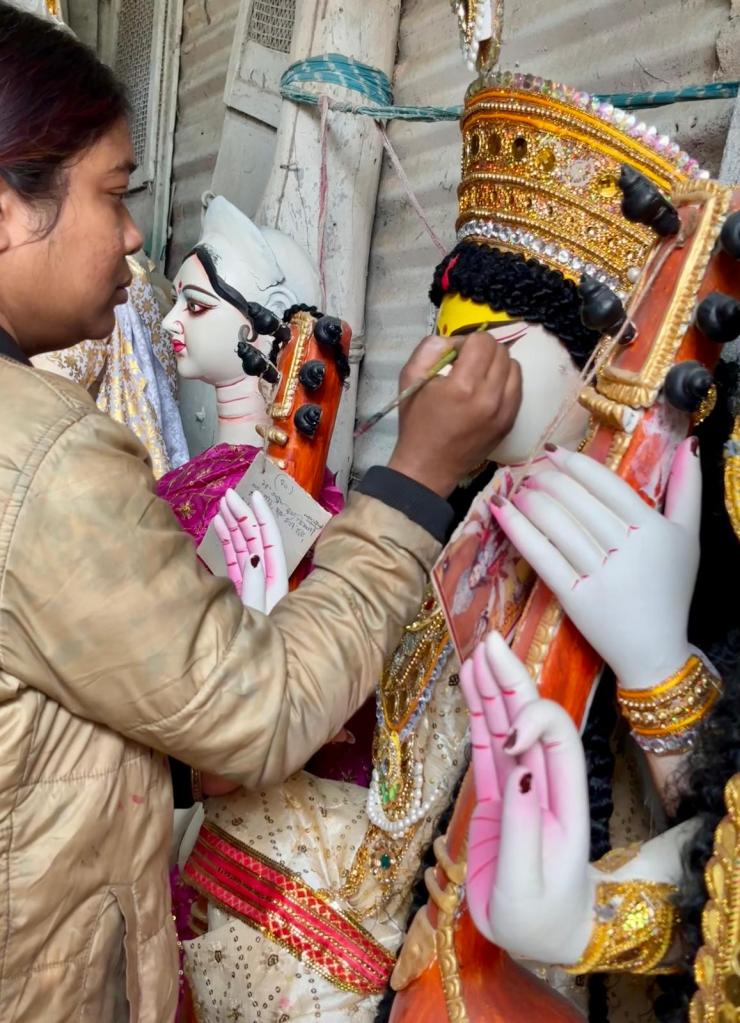
Once fully dry, a thin wash of chalk mixed with very fine clay is brushed over the entire surface. This fills tiny pores, smoothing out the surface, creating an even base that will hold the paint. The painting is almost exclusively done freehand, using natural earth pigments or modern acrylics. Very fine brushes bring the face to life, however the eyes are traditionally painted last and just before the ceremony at the temple and are seen as the moment the idol “awakens.”
Hair is usually added to the idol, often using black jute fibre or sometimes real human hair! stuck on with natural resin or wax. Clothing made of cotton or silk fabric is draped and glued directly onto the body. Crowns, necklaces, musical instruments and weapons are crafted separately by specialist makers. Common materials include lightweight sholapith known for its lightweight (which is easy to carve or mould into shape to form elaborate crowns or headgear), gold and silver-coloured foils, beads, sequins, and tiny mirrors.
Finally
After the idol has been displayed at the festival, it is carried in procession to the river of its birth and immersed. Because the clay was never fired, the figure gradually softens and dissolves back into the water, symbolising the transient nature of existence and closing the cycle of life.
 Lath and Plaster