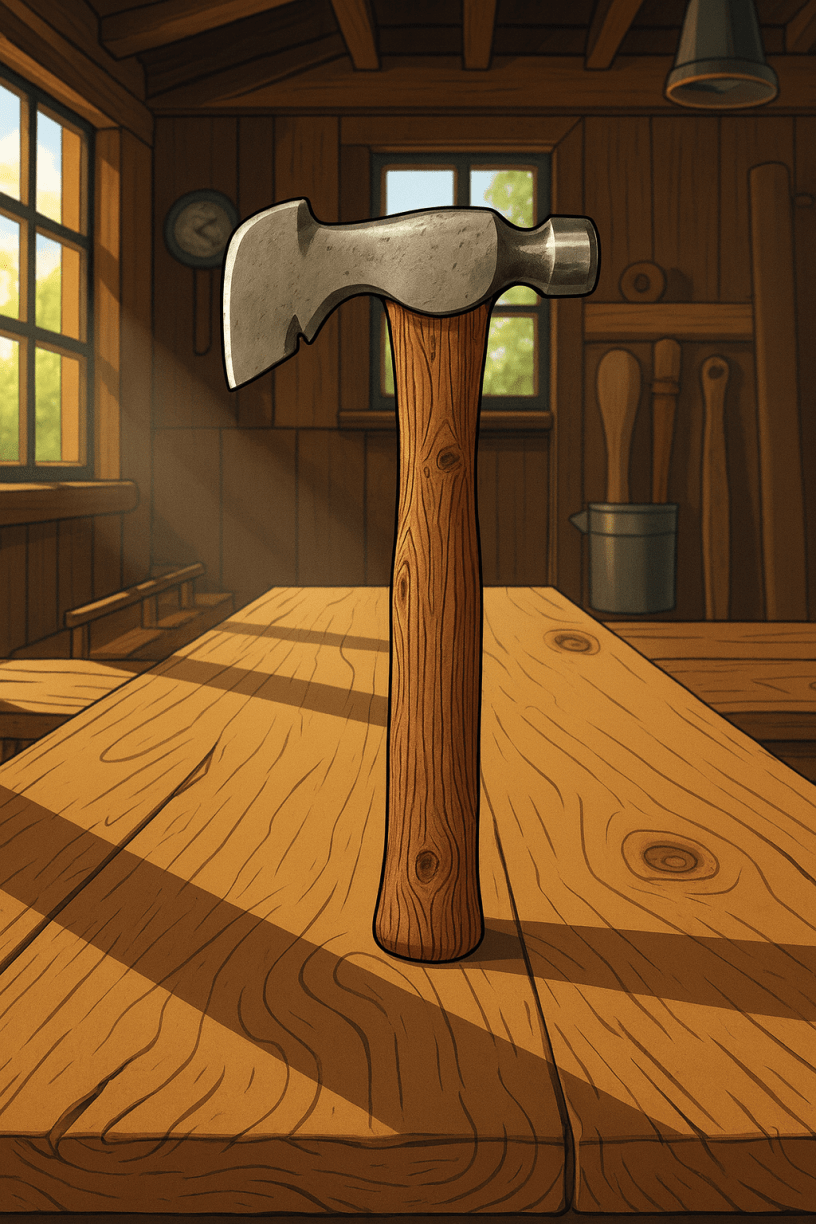
When people talk about historic tools in the plasterers trade they usually think of trowels and floats. Yet one of the most distinctive and practical tools in building history is the lath hammer also called the lathing hammer or lath hatchet.
Part hammer part hatchet and part precision carpentry tool the lath hammer shaped many interior walls long before modern wall board became common. Its origin cannot be credited to a single inventor yet its development shows how craft traditions grow and evolve.
The Purpose of the Lath Hammer
A lath hammer combines several functions in one tool. It carries a hammer face on one side and a small hatchet blade on the other. Some tools include a notch for removing nails. The head shape allows the worker to cut trim and split thin wooden laths while the hammer face drives the small fasteners that secure the lath to the framing.
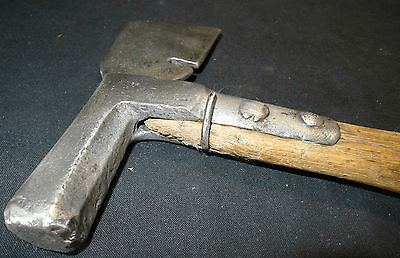
For the long period of lath and plaster building this made it the perfect tool for the job.
The First Appearances in the Early Seventeen Hundred Period
There is no moment of invention recorded for the lath hammer. Instead it enters written history gradually during the early seventeen hundred period in England and later in the American colonies.
Sixteen Sixteen One of the Earliest Records
One early mention appears in the estate inventory of John Ducke of Bicester England who died in the year sixteen sixteen. His list of possessions includes a lathing hammer which shows that the tool was already a normal part of a craftsmen kit.
Sixteen Thirty Three Recorded in Colonial America
Another reference appears in the American colonies in the year sixteen thirty three. This suggests that the tool was already widespread among English workers and was brought overseas by early settlers.
Late Seventeen Hundred Period Becomes a Standard Tool
By the end of the seventeenth century the lath hammer had become a common tool among plasterers and carpenters.
The writings of Joseph Moxon titled Mechanick Exercises produced in the later sixteen hundreds list the lath hammer as a typical tool of the plastering trade used for driving lath nails and cutting laths with the hatchet edge. This shows that by this time the tool required no introduction or explanation.
Eighteenth Century and Onward Broad Adoption and Refinement
Throughout the eighteenth century the lath hammer evolved further. Toolmakers adjusted its proportions added improved nail claws lengthened some blades and stamped their marks onto the metal. Some variations even appeared in ship building where similar tools were used for fitting laths and boards.
Its use continued into the nineteenth and early twentieth centuries in places where wood lath and hand applied plaster remained the main method of constructing interior walls.
Why the Lath Hammer Was Important
Before modern wall board every plasterer depended upon a stable and well fitted lath surface. The lath hammer allowed a single worker to cut laths to length split them when needed drive many small nails remove any misplaced fasteners trim edges and work efficiently around openings and corners. It combined several essential tasks in one simple and effective tool.
The Decline of the Lath Hammer
With the arrival of gypsum wall board during the mid twentieth century the older method of lath and plaster began to fade. Because of this the lath hammer became a less common sight on building sites.
However it continues to be used by restoration craftspeople traditional plaster workers timber framers and tool collectors. It remains a fine example of thoughtful tool design.
Conclusion A Tool Formed by Craft Practice
The lath hammer has no single inventor. It developed naturally out of the needs and skills of the carpenters and plasterers who shaped early buildings. It stands as a reminder that many of the most efficient and enduring tools grew directly from experience and practical problem solving rather than from formal invention.

 Lath and Plaster