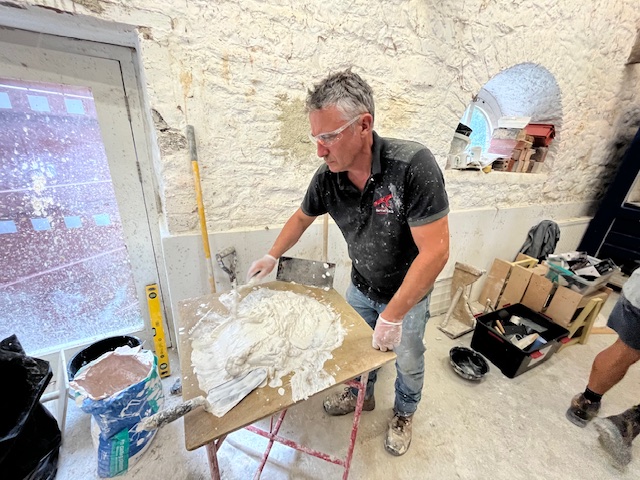
Keith has been busy teaching heritage skills to students at the Tywi Centre, located at Dinefwr Farm in Llandeilo, Wales. He provided an outstanding hands-on learning experience in the traditional craft of plasterwork.
During the course, we explored every stage of the process, starting with cutting profiles and learning the technique of ‘horsing-up’ running moulds for both bench work and in-situ applications, including the essential tools required. We then worked on casting in fibrous plaster and lime putty, as well as running off plaster reverse moulds on the bench.
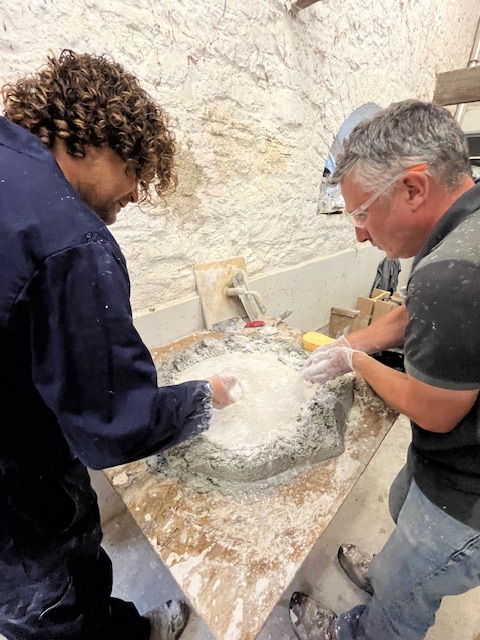
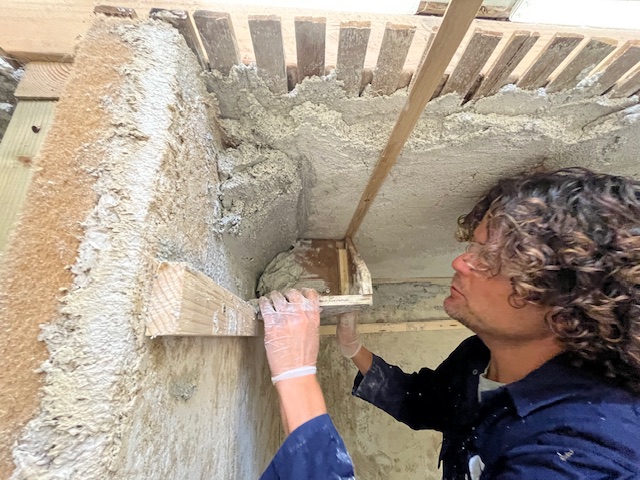
A major part of the training involved preparing and casting a length of fibrous plaster coving to match existing work, followed by preparing and running in-situ ‘cores’ using coarse stuff. We also practised running in lime putty and plaster of Paris, tackling the challenge of an internal mitre, and then progressed to mitring, installing, and stopping-in a fibrous plaster cornice to match historic in-situ features.
Additional skills included taking squeezes in silicone and clay, open-pouring mouldings in silicone, and understanding the use of hot-melt and gelatine in mould-making.
This training emphasised the importance of heritage plastering as a vital part of conserving historic buildings and interiors. Traditional plasterwork is not only decorative but also integral to the structure and character of period properties. By mastering these techniques, craftspeople can ensure the authentic restoration of mouldings, cornices, and ornate detailing that define architectural heritage.
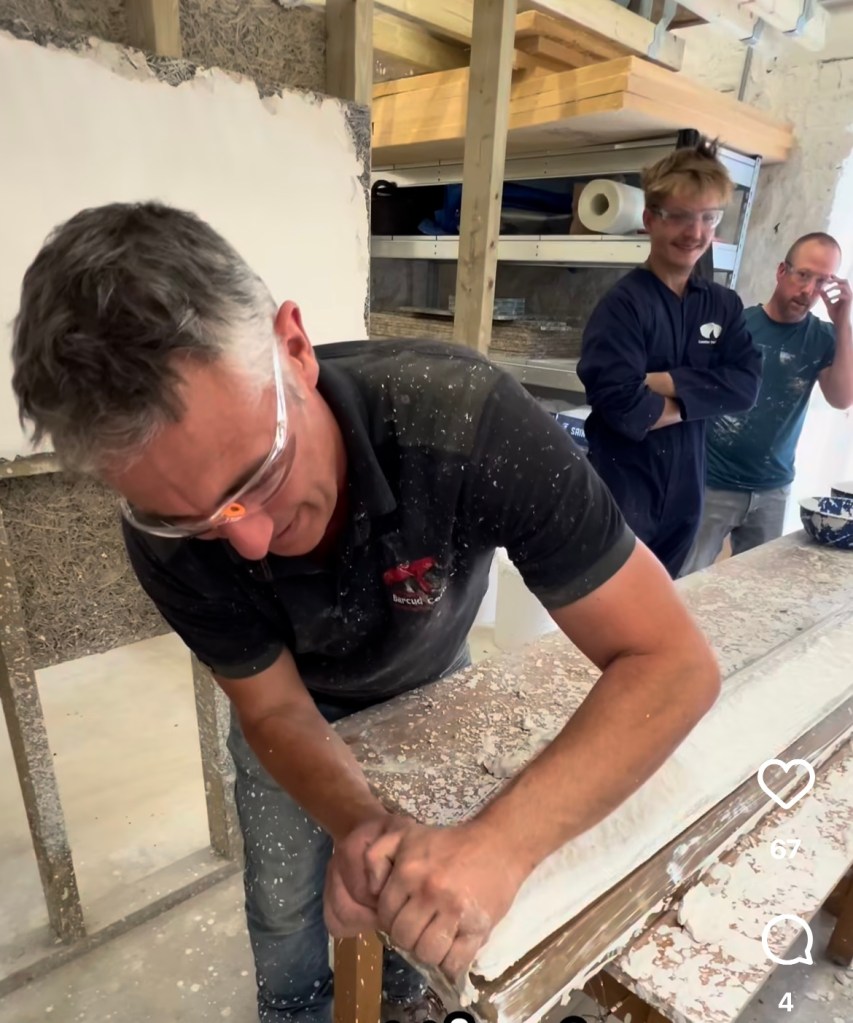
The Tywi Centre’s approach highlights sustainability through the use of lime-based materials, which allow buildings to breathe while preserving their historical integrity. Heritage plastering requires patience, precision, and respect for original craftsmanship—qualities that ensure these beautiful features continue to enrich our built environment for generations to come.

 Lath and Plaster