Introduction
Joseph Aspdin was an English bricklayer who changed the world. He invented **Portland cement** in 1824. This invention helped create modern concrete, which is used in buildings, bridges, roads, and many other structures. Even though he was not a scientist or engineer, Aspdin’s idea became one of the most important in construction history. This essay will explain who Joseph Aspdin was, what Portland cement is, how he invented it, and why it matters today.
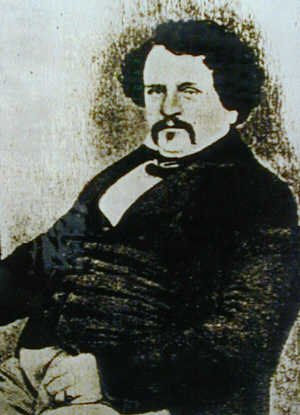
Who Was Joseph Aspin?
Joseph Aspdin was born in 1778 in Leeds, a city in northern England. He worked as a bricklayer and builder, making homes and buildings using bricks, stones, and lime mortar. He did not go to university or have formal education in science. But he was clever and curious. He wanted to find better ways to build strong, long-lasting buildings.
In the early 1800s, most builders used lime mortar. Lime mortar is made from limestone and water. It is easy to use, but it is not very strong and takes a long time to set. Aspdin believed he could make a better material. He wanted something that would harden faster and be stronger.
What Is Portland Cement?
Portland cement is a fine powder that, when mixed with water, becomes a hard and strong material. When mixed with sand and stones, it makes **concrete**. Concrete is the most used building material in the world today.
Aspdin called his invention “Portland cement” because it looked like a type of stone called **Portland stone**. This stone came from the Isle of Portland in England and was used in important buildings, like churches and government buildings. People thought Portland stone was beautiful and strong. By naming his cement after it, Aspdin helped people trust his product.
How Did He Make It?
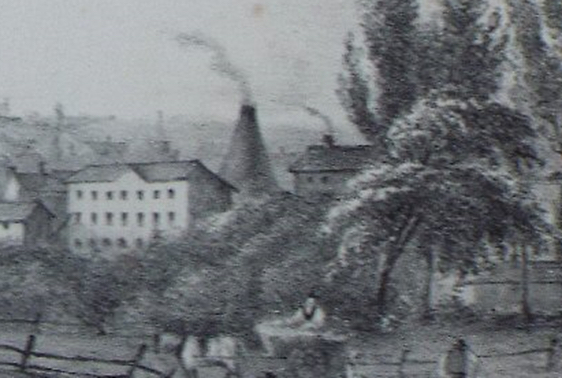
Aspdin made Portland cement in a simple way using common materials. He mixed **limestone** (a type of rock made mostly of calcium carbonate) with **clay** (which contains silica and alumina). He then heated this mixture in a small oven or kiln in his backyard.
When the mixture was heated, a chemical change happened. The materials became a new substance called **clinker**. Aspdin then crushed this clinker into a fine grey powder. This powder was his new cement.
When mixed with water, the cement hardened quickly and became very strong. This made it much better than lime mortar.
The Patent
On **October 21, 1824, Joseph Aspdin received a patent for his invention. A patent is a legal document that gives someone the right to protect and sell their invention. Aspdin’s patent was called:
An Improvement in the Mode of Producing an Artificial Stone
This artificial stone was the Portland cement we know today.
Even though Aspdin had invented a great material, he was not a businessman. He started a small cement works in Wakefield, Yorkshire, but he did not make much money from it. Later, his son **William Aspdin** took over the business and improved the process even more. William heated the materials to higher temperatures, which made the cement even stronger. This version of cement became the basis for modern Portland cement
Why Was It Important?
Aspdin’s invention changed the way we build. Before Portland cement, people used stone, brick, and weak mortars. These materials worked but had many limits. Buildings could not be very tall, and repairs were often needed.
With Portland cement, builders could make strong **concrete**. Concrete can be shaped into anything and lasts a long time. It is also fireproof and water-resistant. This allowed people to build:
Joseph Aspdin died in 1855, but his invention lived on. Even though he didn’t become rich or famous in his lifetime, his work laid the foundation for modern construction. Today, almost everything around us—roads, homes, offices, airports—is built using some form of concrete made with Portland cement.
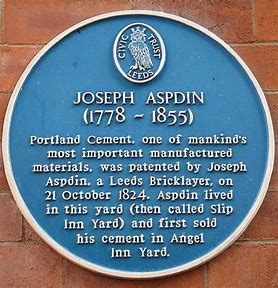
In Leeds, there is now a plaque that honours Aspdin’s work. It marks the place where he lived and invented Portland cement. The plaque reads:
Joseph Aspdin (1778–1855) Portland Cement, one of mankind’s most important manufactured materials, was patented by Joseph Aspdin, a Leeds bricklayer, on 21 October 1824.”
Conclusion
Joseph Aspdin was not a scientist or a rich inventor. He was a builder who wanted to solve a problem. By mixing simple materials and using heat, he created Portland cement—a product that changed the way we build. His invention helped create safer, taller, and stronger buildings all over the world.
Although he did not live to see the full impact of his work, Joseph Aspdin’s name will always be remembered as the man who gave the world one of its most important building materials. His story shows that curiosity, creativity, and hard work can lead to great things.
 Lath and Plaster