
By Mick Hargreaves
Plasterboard, also known as drywall, is a widely used material for building walls and ceilings. It was invented by an American named Augustine Sackett in 1894. Before this invention, constructing walls was a slow and messy process. Workers had to attach wooden strips called laths to wall frames and then cover them with wet plaster, which took days to dry.
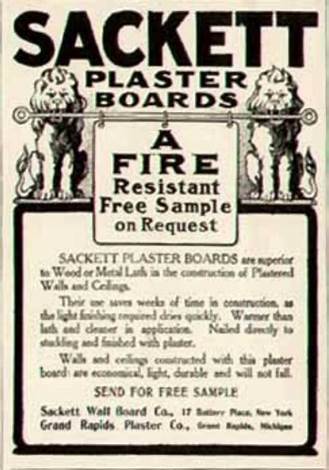
Sackett wanted to make building walls faster and cleaner. He created a board made of gypsum plaster placed between two sheets of heavy paper. This new board could be nailed directly to wall frames and was ready to use immediately. Sackett’s invention was called “Sackett Board.” It was strong, easy to handle, and didn’t crack easily. It also helped protect buildings from fire.
In 1901, the United States Gypsum Company (USG) acquired Sackett’s company and began improving the product. They made the boards lighter, more durable, and easier to install. By 1917, they introduced “Sheetrock,” a brand name that became synonymous with drywall.
During World War II, there was a shortage of building materials like wood. Plasterboard became very popular because it was quick to install and didn’t need much labor. After the war, it became the standard way to build walls and ceilings in many homes and buildings.
Today, plasterboard is used all over the world. It comes in different types, including ones that resist moisture and fire. Thanks to Augustine Sackett’s idea, building walls became faster, safer, and more affordable.
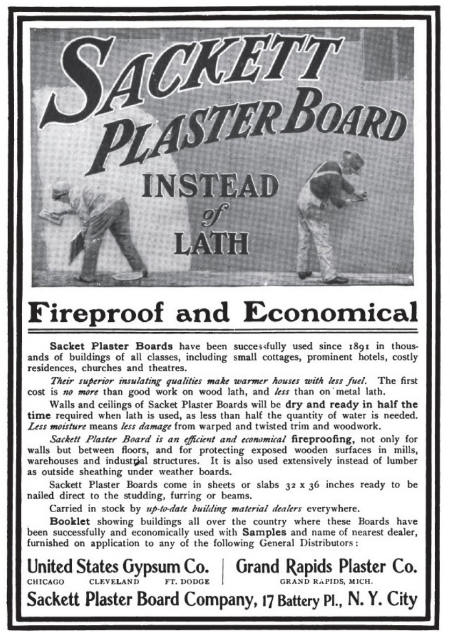
In the UK, plasterboard is commonly used in construction and is available in various sizes and thicknesses to suit different building needs. It’s an essential material in modern construction, providing a smooth surface for painting or wallpapering and contributing to the overall energy efficiency of buildings.
Whether you’re renovating a room or constructing a new building, plasterboard offers a practical and efficient solution for creating interior walls and ceilings.
 Lath and Plaster