By Master Plasterer Mr Colin Morris
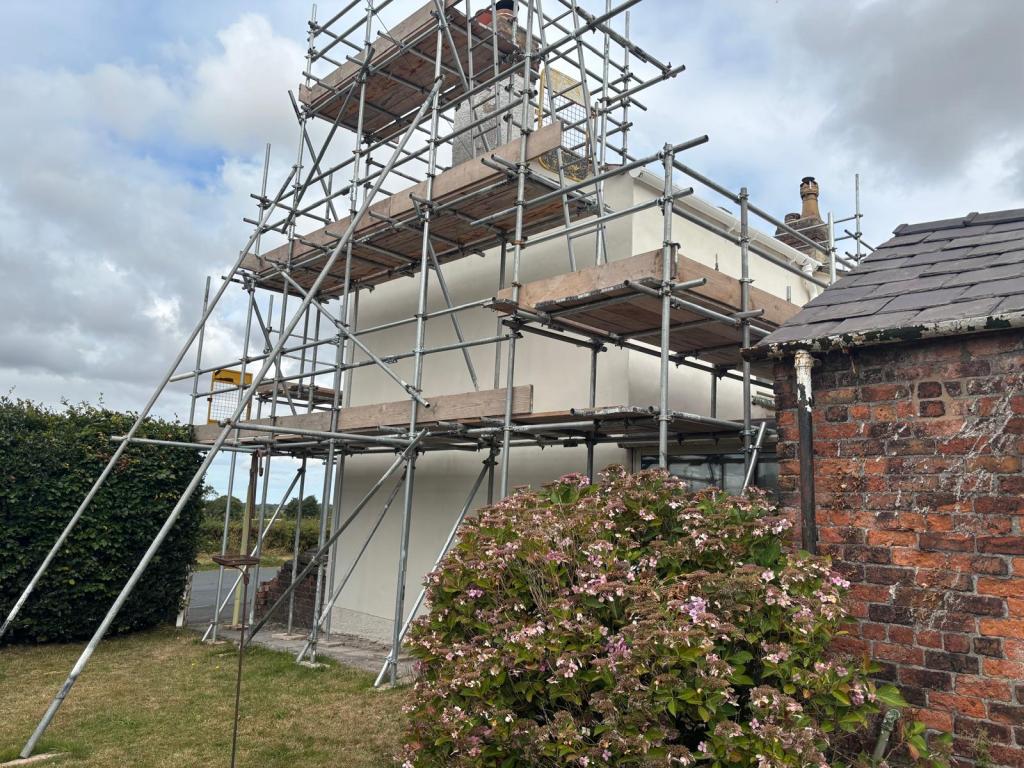
The restoration of the historic Bickerstaffe Windmill has recently reached an important milestone with the completion of its lime rendering, and work is now being finalised on the adjoining Miller’s Cottage. Although these two properties belong to different owners, they share a common heritage and now a matching traditional lime render finish that reflects their historic character.

Both the Windmill and the Cottage date back to 1756, when they were commissioned by the Earl of Derby as part of agricultural improvements across his estate during the 18th century. At that time, windmills played a vital role in rural economies, grinding grain for local communities. The Bickerstaffe Windmill remained a working mill for over a century before embracing technological progress: in the 19th century, it was converted to steam power, mirroring the industrial innovations that swept across Britain. Eventually, like many historic mills, it ceased agricultural use and was carefully adapted into a private residence.

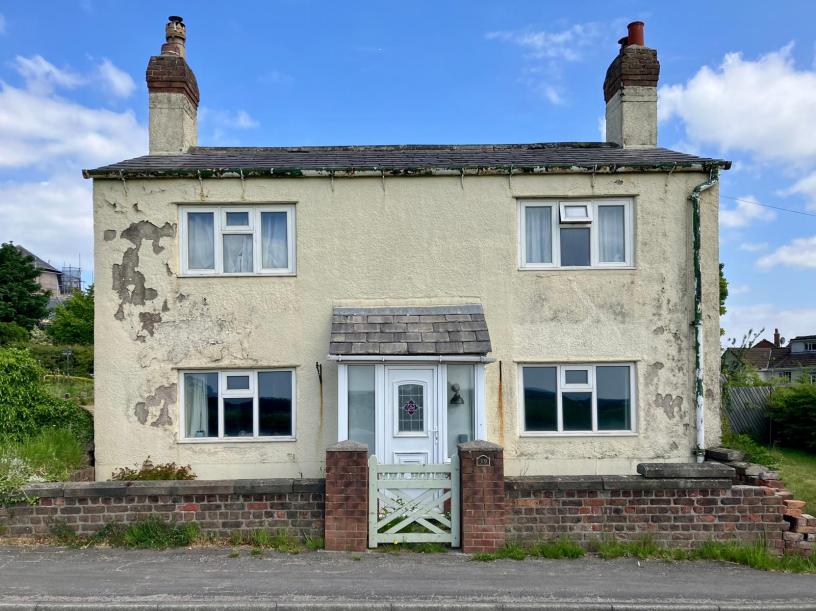
By the late 1970s and early 1980s, however, both the Windmill and the Cottage experienced alterations that were far from sympathetic to their historic fabric. Their original lime render was replaced with hard cement render and later covered with a thick, resin-based textured finish. These non-breathable coatings acted like a plastic bag, trapping moisture within the walls and causing serious structural and fabric issues—a common problem for historic buildings treated with modern, incompatible materials.
Recognising this, the current owners of both properties agreed that the inappropriate cement render needed to be removed. The restoration team’s task was to strip away these harmful layers and reinstate a breathable lime render, allowing the buildings to function as originally intended.
Lime render was chosen for its unique properties that make it ideal for historic structures. Unlike cement, lime is both flexible and vapour-permeable, which enables moisture to pass through the walls rather than becoming trapped inside. Its ability to expand and contract with the building reduces the risk of cracking and ensures long-term durability. When correctly applied, lime render can last for decades while preserving the authentic character of heritage architecture.
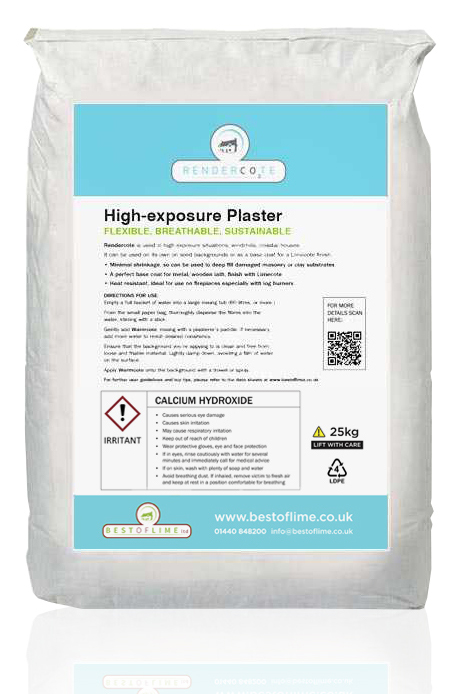
For the Bickerstaffe project, a traditional three-coat lime render system was used, incorporating a modern adaptation for the final coat. Given the exposed location, with open fields stretching toward the Irish Sea, a specialist product called Rendercote by Best of Lime was selected for its exceptional flexibility and durability. This was particularly important for the Windmill’s curved structure, which undergoes greater movement than a conventional building.
Both properties were then completed with a silicate mineral paint. This was chosen for its breathable qualities and long-lasting protective properties, ensuring that the walls remain strong, resilient, and visually sympathetic to their historic origins.
The result of this meticulous work is a finish that is both durable and aesthetically pleasing. It enhances the appearance of these 18th-century buildings while respecting their remarkable history and securing their preservation for future generations.
 Lath and Plaster