You could smell the damp before you even walked into the place.
Old Victorian terrace, gutted down to the studs, half the plaster stripped and crumbling. The boss wanted it skimmed quick before the frost hit.
Three-man crew: Daz, Connor, and Lee.
They started in the front room — easy enough job. But the walls didn’t take right.
Every coat bubbled, cracked, peeled back as if something underneath was pushing through.
By day three, Daz said it plain:
It’s like the bloody walls are breathing.
They laughed, but that night Connor stayed late to even out a patch. He texted his missus a photo at 8:42 — half-finished wall, tools on the floor.
He never texted again.
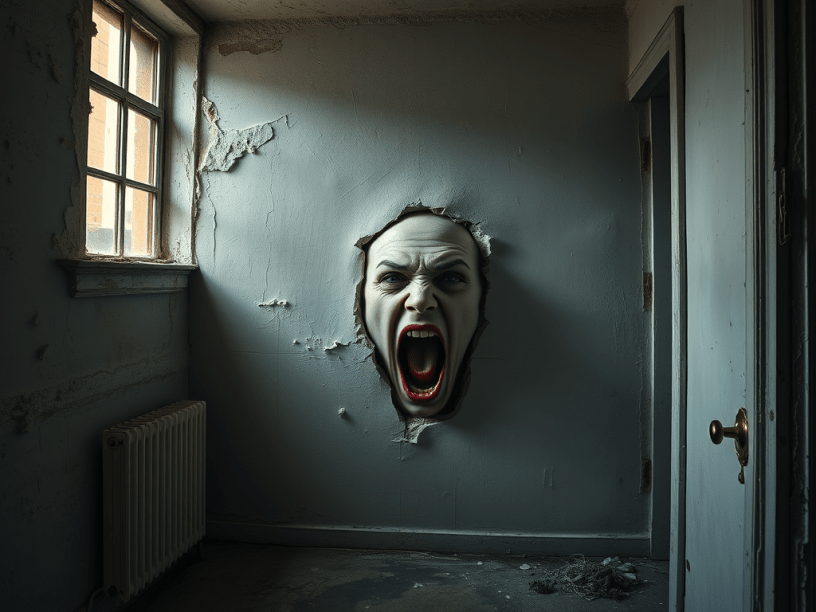
When Daz came in the next morning, the room was spotless. Connor’s tools were gone, his mix bucket rinsed clean. The skim on the wall was perfect — glassy smooth — but in the morning light, Daz saw something trapped inside it.
A face.
Pressed flat beneath the plaster, mouth open, eyes wide, frozen mid-scream.
They called it in — police, fire brigade, everyone. But when they chipped the plaster away, there was nothing behind it. No cavity. No sign of Connor. Just solid wall.
Lee quit that day. Daz stayed long enough to load the van. He swore he’d seen handprints appear in the dust on the dashboard as he drove off — pale white, dragging streaks across the glass.
The developer brought in a new crew. They worked fast, no nonsense.
The foreman joked, Hope we don’t end up part of the décor.
Two weeks later, when the building opened, the tenants complained about noises inside the walls — scraping sounds, slow breathing behind the plasterboard, whispers when the lights went out.
One plumber swore he saw a man’s face pushing against the wall near the boiler, the surface stretching like wet plaster — before snapping flat again.
They sealed the room off.
But if you tap the wall, sometimes you’ll hear it knock back.
Not hollow.
Thick. Heavy. Alive.
 Lath and Plaster