Starting Out
Tell us a bit about how Exmoor Oak began — what first drew you to working with timber, and how did the idea for the business take shape?
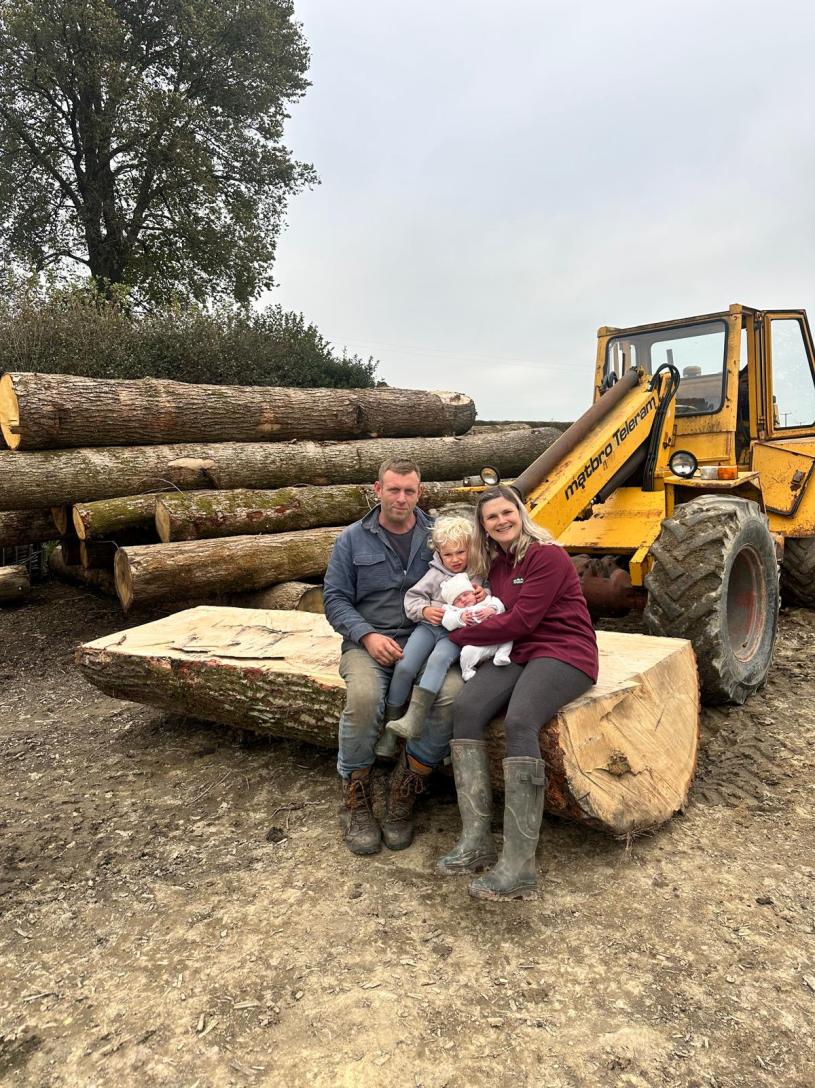
I’m lucky enough to have grown up in Devon with quite a different upbringing than most. From the age of one, I was going to Glastonbury Festival on the Green Craft Field with my father, who really ignited my interest in wood, traditional crafts, and dying skills. He worked on top of Exmoor teaching local schoolkids—often the ones who weren’t thriving in classrooms—skills like hedge-laying, dry-stone walling, and forestry. It was like catnip to me.
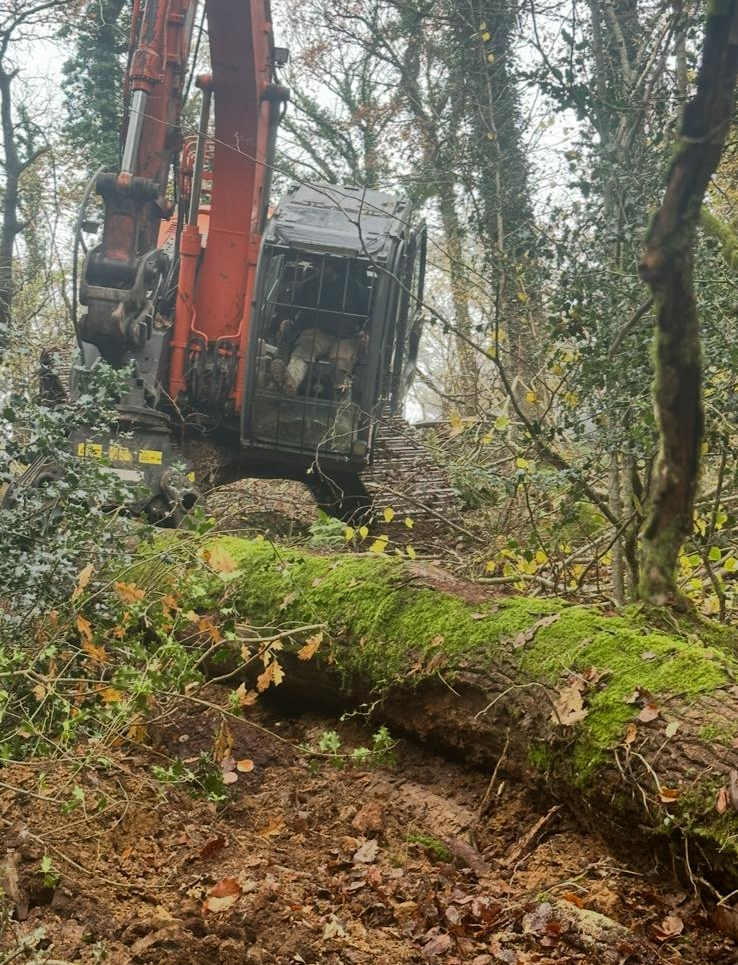
I started my career in the woods at 15, felling and winching trees on steep ground to a harvester—rain or shine—for 15 years. Eventually, I progressed to owning my own sawmill. After several injuries and a nasty bout with sepsis, I had to leave full-time forestry and focus on converting a barn with my wife. My sawmill played a huge role in building our house, and with a newborn in the mix, life was hectic!
The laths really took off when I had a chat with a few local lime suppliers—it snowballed from there. I started cutting sawn laths for four or five local suppliers. My mind tends to wander when I’m cutting, doing repetitive work for hours on end, and that’s when ideas like oak adders and lath mats came to me. The response to both has been incredibly encouraging.
Your name ties you closely to Exmoor. How does the landscape or community around you influence your work and approach to timber?
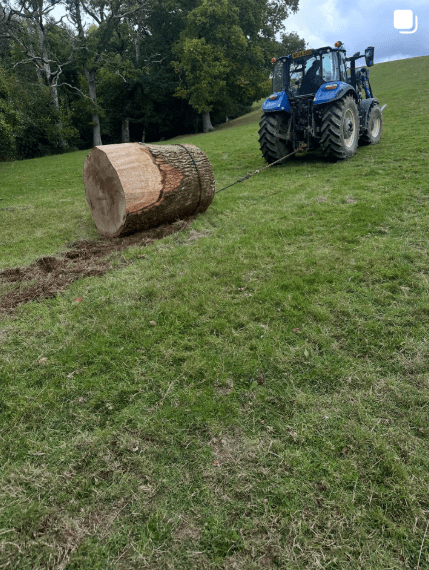
We live just two valleys away from the moor—it can be fairly wild in midwinter. I source a lot of timber locally from farmers and estate owners, usually within about 15 miles. The community here is very rural, and people always lend a hand. It’s not about money—it’s more of a “you give me a day, I’ll give you a day” kind of arrangement, which is a really fortunate position to be in.
From Tree to Lath
Could you walk us through the process — from selecting the oak to producing the finished laths? What stages or details make the biggest difference to quality?
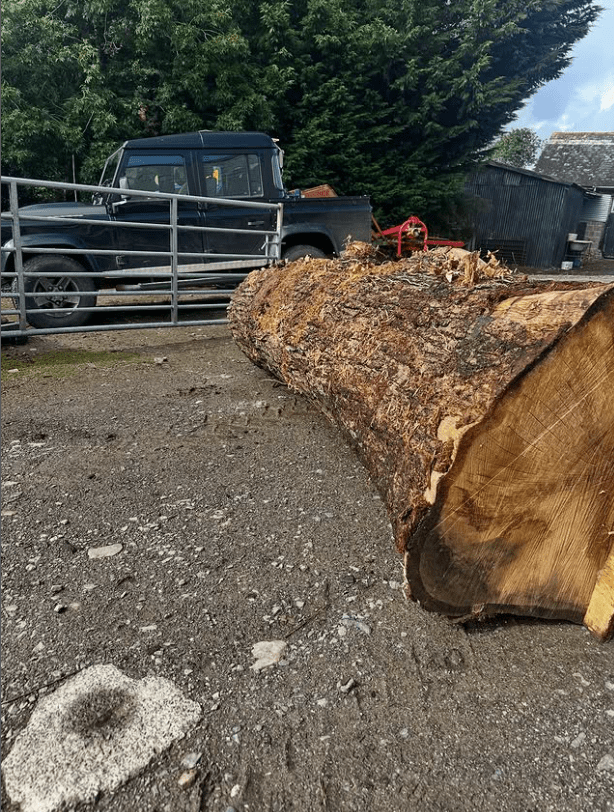
That’s probably the most important part of making a lath. Whether I buy timber from a managed estate woodland or winch out a windblown tree, the first step is assessment: location, species, and grade. Every tree is like a book—no two are the same. I look at each log and imagine what every part could become: beams, laths, joinery, fencing.
Laths require straight-grained, knot-free oak. Any wandering grain or even small “catspaw” knots—while beautiful in furniture—are too weak for laths.
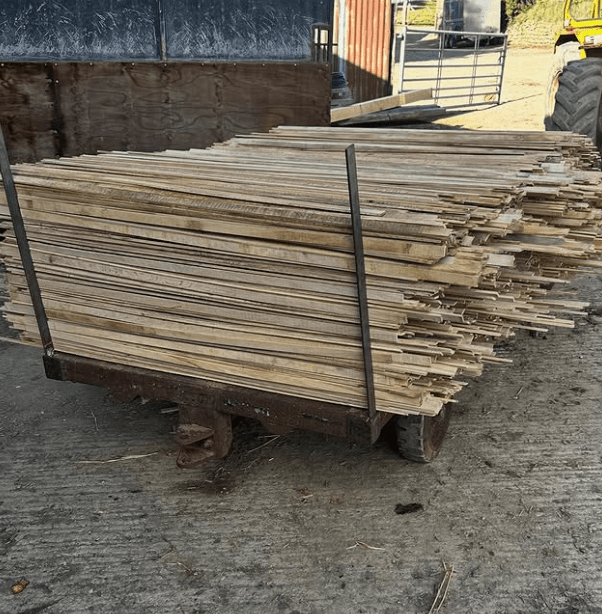
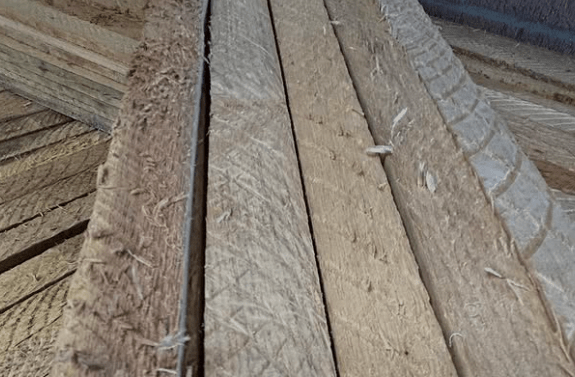
Once home, the timber goes onto the mill. I cut the tree into planks, turning it until it’s completely planked or until I reach the knotty heartwood, which often becomes beams. Then the planks are cut to lath thickness and sent through our purpose-built “addering” machine, which gives them that rough, hairy texture. They’re then bundled into packs or made into lath mats.
It’s not a quick job—every plank behaves differently—and reading the tree properly is an art form in itself.
Traditional Meets Modern
Lath production is an old craft, but your approach seems to blend heritage methods with new ideas. How do you balance handcraft tradition with modern machinery or efficiency?
The sawn lath process is almost identical to what it was 120 years ago—the principle hasn’t changed, only the technology. We’ve upgraded gradually through three sawmills, and this spring we invested in a Serra sawmill—the crème de la crème. It’s accurate to within half a millimetre and uses a wide band for stable, precise cuts.
That said, a band sawmill demands constant maintenance and attention. You have to keep an eye on everything to ensure its cutting correctly.
The Exmoor Oak “Adder Lath”
You’ve developed something called the Adder Lath. Can you tell us what that is, how it came about, and what benefits it offers for plasterers or builders?
The Adder Lath came about one day while I was bundling some riven laths. I realised people love riven laths mainly for their texture. Of course, in historic buildings, riven should go back in—but since riven laths are becoming a dying craft, I saw my Adders as the next best thing.
The key benefit is texture and surface area. Adders have far more surface area than traditional riven laths, which means stronger bonding for plaster. The Adder Lath mats are ideal for plasterers working on larger areas—they drastically cut down the time spent nailing up individual laths. What might take two days can be done in four or five hours, freeing up more time for plaster coats to dry and for tradespeople to move onto the next job.
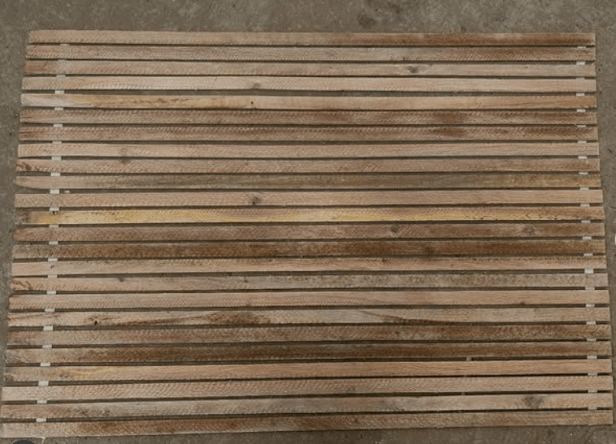
“Exmoor Oak Adder®”
Sustainability and Stewardship
Many readers care deeply about responsible materials. How do you source your oak, and what steps do you take to work sustainably — both for the environment and local economy?
Ninety-nine percent of our oak comes from within 20 miles of the mill—something we’re very proud of. Most of it is either windblown or from managed woodland. Traditionally, around 30% of a felled tree would go to waste, but we’ve eliminated that.
We have a biomass gasification boiler—one of the most eco-friendly systems—on-site. It burns all the waste wood, heating our house and soon our kiln. The sawdust goes to local farms: cows in winter, free-range chickens in summer. All of it stays within a two-mile radius. Nothing is wasted.
Craftsmanship and Quality
Every piece of timber is unique. What does quality control look like for you? How do you decide what makes a piece “Exmoor Oak standard”?
Reading a tree properly is everything. Some of the oaks I’ve milled have been standing for 150 to 400 years, so making the most of them feels like a duty.
Cutting oak is always a gamble—you encounter shake, stones, even metal. Steel reacts with the tannins in oak, causing blue staining, and stones can dull a band instantly. I’ve even hit shotgun pellets and bomb fragments, though thankfully not too often around here!
For our lath standard, the wood needs to be knot-free and straight-grained. You should be able to hold one in each hand, arms out straight, and bend them into a horseshoe shape without it snapping. That’s “Exmoor Oak standard.”
Working with Craftspeople
You must collaborate with plasterers, builders, and conservation experts. What’s that relationship like? Do you find that their feedback influences how you refine your products?
Absolutely. We work closely with architects, the National Trust, lime suppliers, and plasterers. If they speak, we listen. Flexibility and customisation are essential—what works for one person might not for another.
Feedback keeps us improving. Hearing different perspectives and seeing what’s happening beyond our own bubble helps us adapt, grow, and stay relevant.
Looking Ahead
What’s next for Exmoor Oak? Are there any new projects, materials, or collaborations on the horizon that you’re particularly excited about?
There are definitely a few ideas floating around in the sawdust. We just welcomed our newborn, Ernest, at the start of September, so I’m currently juggling nappies, my three-year-old Ronnie, the mill, and a lot of coffee!
Over the next month, I’ve got meetings lined up with some new lime suppliers and another project related to lime plastering in the works. I can’t say too much yet—but watch this space!
Contact Mobile 07419318998
Email esaw.timber@outlook.com
 Lath and Plaster