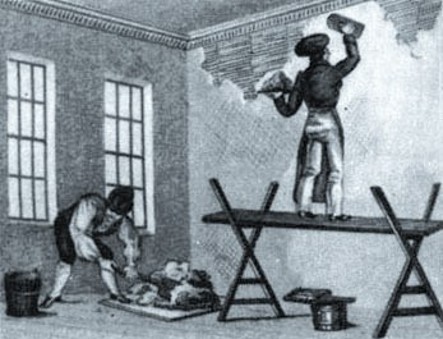
Plastering is one of the oldest and most enduring building crafts. Its smooth walls and ornate ceilings have shaped our architectural heritage, yet behind every elegant cornice lies a story of skill, discipline, and centuries of tradition. Between 1600 and 1950, the path from apprentice to freeman in the plastering trade reflected not only the evolution of craftsmanship but also the changing fabric of British society — from guild regulation and city charters to industrialisation and technical education.
The Early Craft Guild System (1600–1700)
In seventeenth-century London, to call oneself a plasterer was to belong to a regulated and prestigious fraternity. The Worshipful Company of Plaisterers, chartered in 1501, was one of the many livery companies of the City of London that governed standards, controlled entry to the trade, and upheld the moral and economic order of craftsmanship.
Young lads, often around the age of fourteen, were formally bound to a master plasterer for a term of seven years — the standard length set by the Statute of Artificers of 1563. During this time, the apprentice lived in the master’s household, worked long hours, and was expected to remain obedient and celibate until his service ended. The apprenticeship was as much about moral discipline as manual skill.

When the apprentice completed his term, he could apply to be admitted as a Freeman of the Company — and later, as a Freeman of the City of London. This status allowed him to practise his craft independently, take on his own apprentices, and trade freely within the City. It was a form of citizenship, trade licence, and social recognition rolled into one.
A good example from the Plaisterers’ Company archives is William Lambe, who was apprenticed to Robert Garsett on 13 March 1599/1600 and made free on 26 May 1607. Lambe’s seven-year term exemplifies the classic early modern training route. Records show that while still apprenticed, he was paid for church plastering work — a sign of both his competence and the Company’s close supervision of trade practice. By 1625, Lambe had completed his working years, and after his death his widow appears in the Company’s charity list, evidence of the guild’s welfare function.
For men like Lambe, becoming a Freeman was more than a professional qualification — it was a gateway to stability and community in an era of strict trade boundaries.
Ornament and Ambition (1700–1800)
The eighteenth century brought changes in architecture and taste. Georgian London loved symmetry, ornament, and refinement. Plastering evolved from a practical coating to a decorative art. Interiors glittered with swags, rosettes, and coffered ceilings.
Apprenticeship still formed the backbone of training. Young plasterers learned how to mix lime, sand, and hair, apply render to walls, and mould intricate designs in situ. But as the craft became more decorative, a hierarchy emerged between solid plasterers (who worked on structural walls) and ornamental or stucco plasterers (who produced the elaborate finishes).
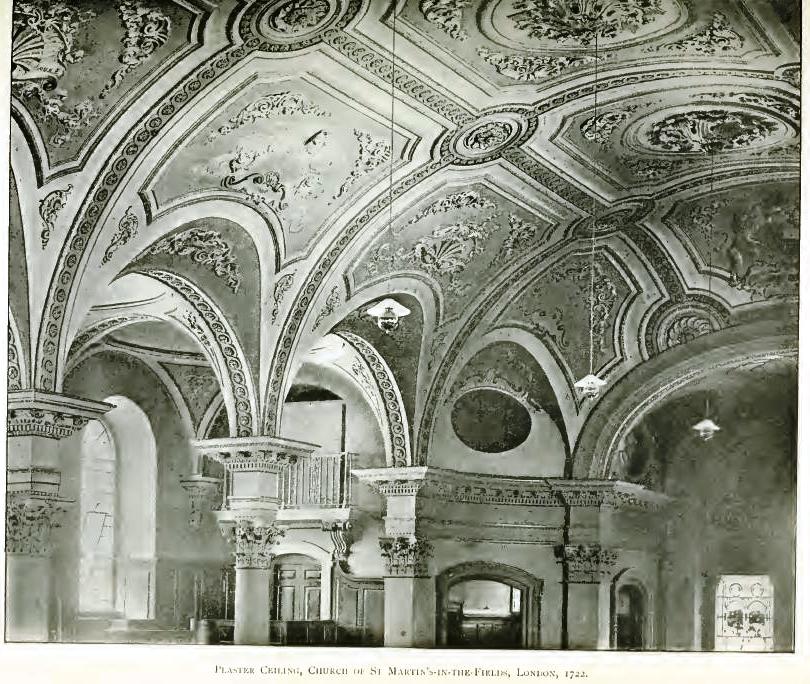
The Worshipful Company of Plaisterers continued to oversee admissions and freedoms. New freemen were admitted “by servitude” (after apprenticeship), “by patrimony” (as sons of freemen), or “by redemption” (through payment). The guild also enforced quality standards, resolving disputes with other building trades over who had the right to carry out certain kinds of work.
During this century, a talented plasterer could rise far above the workshop. One remarkable example was John Papworth (1750–1799), a London stuccoist who became one of the most successful ornamental plasterers of his age. Papworth’s business employed hundreds of men and supplied decorative plasterwork to grand houses, theatres, and civic buildings. Though we do not know his apprenticeship record, his career embodies the evolution of the craft from small-scale artisanal practice to an early form of industrial enterprise.
Papworth’s ascent also highlights a subtle shift in meaning: being a freeman was no longer simply about having the right to trade; it was about prestige, reputation, and entrepreneurship within an expanding market economy.
The Industrial Age (1800–1900)
By the nineteenth century, Britain’s building trades were transformed by urbanisation and industry. The old guild system was fading, yet the Plaisterers’ Company adapted by promoting technical education and supporting new forms of training.
In 1877, the Company joined seven other livery companies to found the City & Guilds of London Institute, ensuring that apprentices received not only hands-on experience but also scientific instruction in materials, measurement, and design. The path from apprentice to freeman was no longer controlled solely by the master craftsman — it now included classrooms and examinations.

Apprenticeship terms remained around six or seven years, but conditions had changed. Apprentices were often paid modest wages and no longer lived in their master’s home. Large firms replaced individual masters, and journeymen worked on contracts that spanned the expanding city.
Yet the old City traditions survived. Gaining the Freedom of the City of London remained a mark of honour, though by the late nineteenth century it was as much ceremonial as practical.
The craft itself diversified. Fibrous plaster — lightweight, cast plaster reinforced with hessian and timber — revolutionised ornamental work, allowing ceilings and mouldings to be prefabricated off site. A plasterer could now work not only in houses but in theatres, museums, and department stores.
A Modern Master: Joseph Bernard Clark (1868–1940)
At the turn of the twentieth century, Joseph Bernard Clark epitomised the new age of the professional plasterer. Trained in ornamental plasterwork, Clark co-founded the firm Clark & Fenn, which became synonymous with high-quality fibrous plastering. The company’s work adorned the interiors of many famous London theatres and cinemas, where sweeping cornices and gilded domes were assembled like architectural sculpture.
Although a record of Clark’s formal apprenticeship or freeman admission, his career represents the continuation of the old craft in a modern form. His firm trained its own apprentices, maintained standards of excellence, and embodied the same pride and discipline that the Plaisterers’ Company had nurtured for centuries.
Between War and Reconstruction (1900–1950)
By the twentieth century, the industrial model of plastering dominated. Apprenticeships were shorter and more structured, often combining on-site training with evening classes at technical colleges. The Plaisterers’ Company, while no longer regulating who could practise, remained a custodian of tradition — awarding prizes, supporting training, and maintaining the dignity of the trade.
During the Second World War, the Company’s hall — rebuilt in the nineteenth century — was destroyed in the Blitz. Yet the spirit of the craft survived. Post-war Britain needed plasterers to rebuild cities and restore historic buildings. Those who completed their apprenticeships in the 1940s and 1950s were heirs to a lineage stretching back four centuries.
The journey from apprentice to freeman had changed profoundly. What began as a legally binding servitude under a guild had become a professional training path shaped by industry and education. But the core remained: mastery through skill, discipline, and dedication.
Legacy of the Freeman Plasterer
From William Lambe’s humble seven-year servitude in the early 1600s to Joseph Bernard Clark’s modern plastering firm three centuries later, the plasterer’s story mirrors the story of Britain itself — from craft guild to industrial nation.
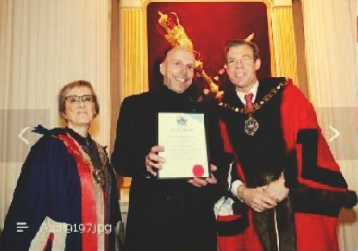
The Freedom of the City of London, once a hard-won right to trade, has today become a symbolic honour. Yet for the Plaisterers’ Company, it still represents continuity: a recognition that craftsmanship, in whatever form, depends on learning, patience, and pride.
To trace the plasterer’s journey from apprentice to freeman is to see the transformation of work, art, and identity over 350 years. The tools may have changed, but the essence of the craft — turning raw material into lasting beauty — remains the same.
 Lath and Plaster