Flag House Restoration
The Flag Houses are locally iconic and were built in around 1910 for Thomas Baskcomb’s company The Louvre Limited. Referred to locally as the Flag Houses, their gables are decorated with a cement flag, incorporating the house name.
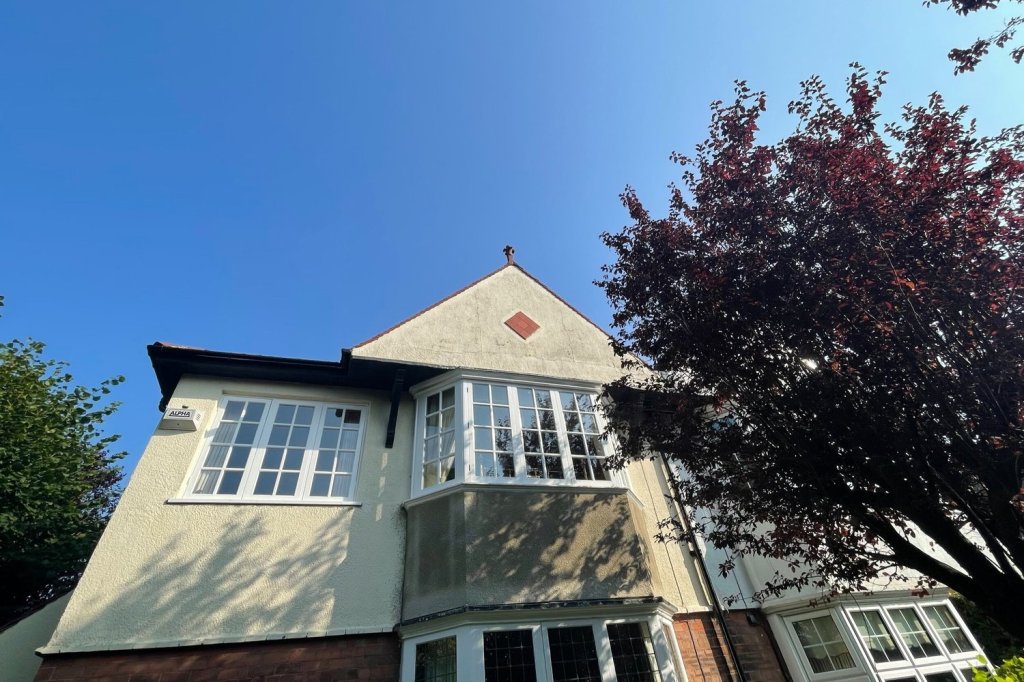
Each house has a ‘gable stone’ with an ornate flag moulding with the house name in the centre.
We were contacted by the owner of the property to repair and restore the Flag House to its former glory. The flag had been badly damaged before the previous occupier purchased the property in the 70s – the name was no longer visible.
What We Did
The Flag House Edwardian semi-detached property, the Flag House was in the process of being decorated internally when the owner noticed wet rot, with the main joist and gable end rotten. The timber needed replacing and the gable re-rendering.
Having worked on a project for the owner previously, he contacted us with the knowledge that we had undertaken a similar project on the Flag Houses, Weelsby Road. After an initial survey with the client, discussing the project and what they wanted to achieve, and the relevant structural checks made, we were commissioned to reinstate the flag motif on the house as part of this restoration project.

During this process a template of the flag was taken from one of the neighbours houses, to be used as a base for the replacement flag. This is done by tracing the existing flag to allow us to get an overview template design of a flag that was in good condition.
From the tracing template, we then were able to make a timber template to get the basic shape to the flag.
The drawing was sent to Saffron Mouldings, a clay artist who started the clay modelling process, using timber boards before applying clay and creating the flag detailing and lettering (using stencils for precision).
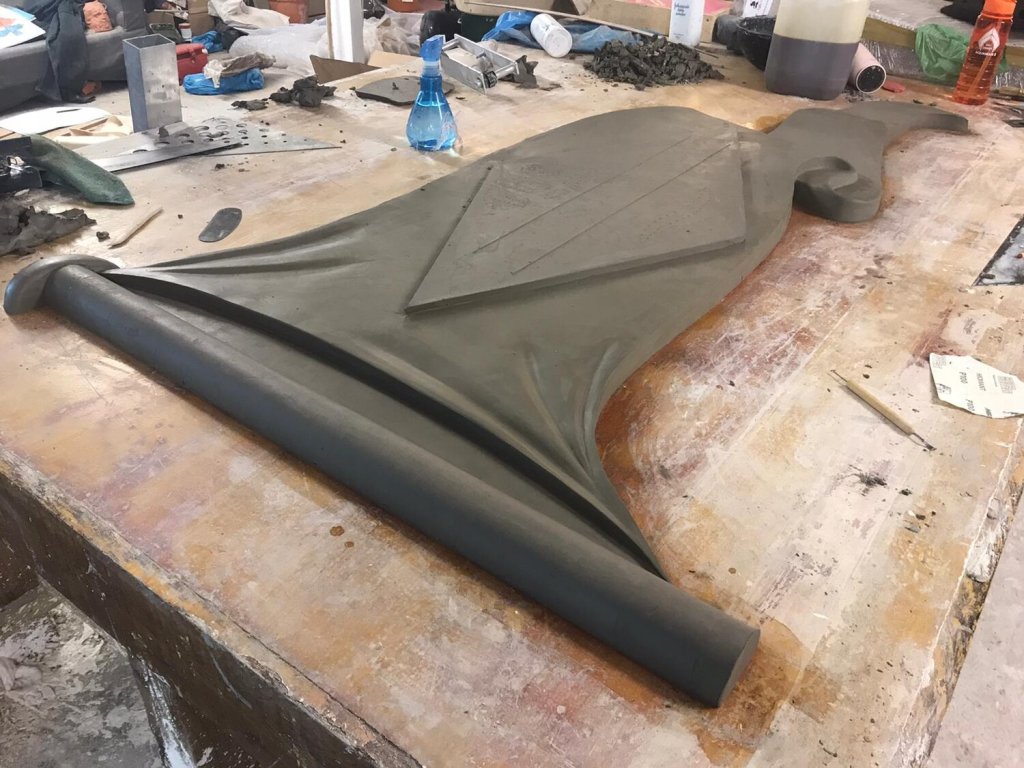
Saffron Mouldings then created the clay model and made the lettering detail (the wording was created by printing the name in the chosen font and cutting this out using tools), transferring it into clay.
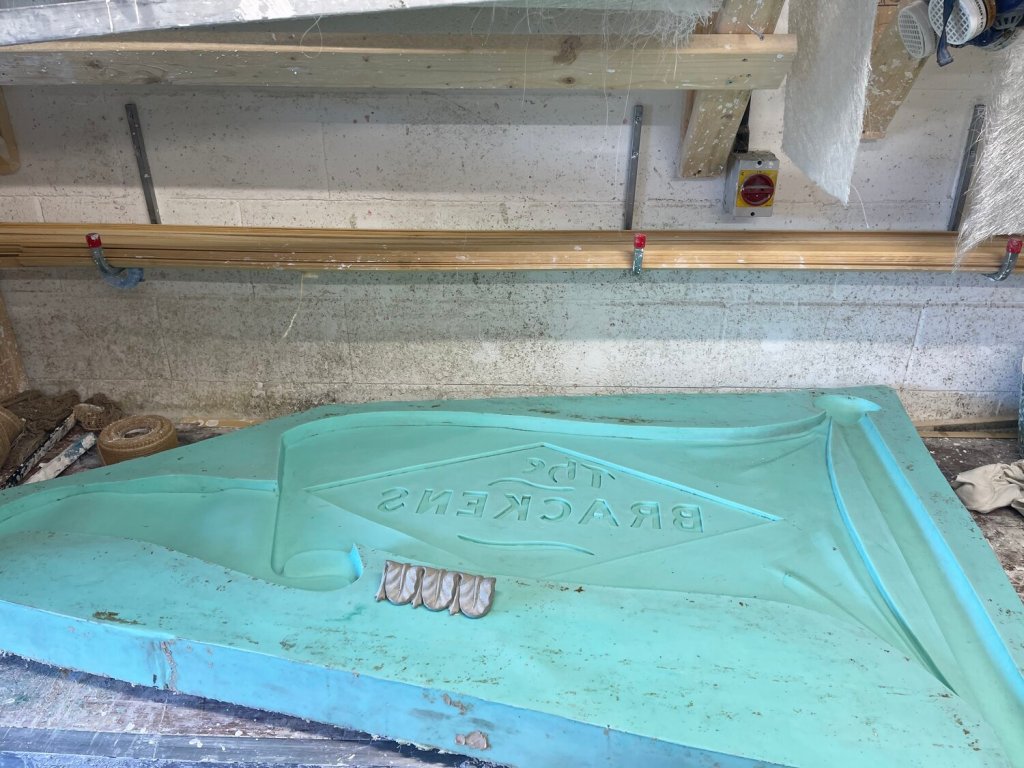
The completed clay piece was modelled and a silicone rubber mould was then made, this is called a reverse mould. The reverse mould was then sent to us to make a cast out of it, which allowed us to see what the finished product was going to look like.
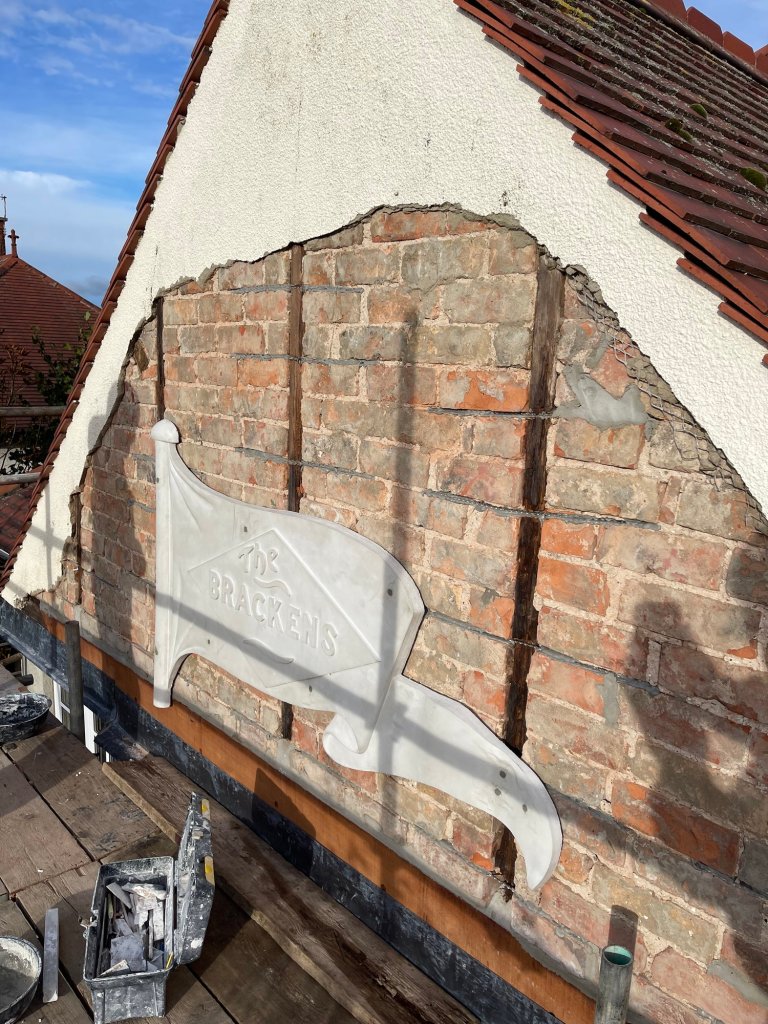
Once the mould was ready, the correct resource was poured into the mould, in this case glass reinforced cement, but it can be made from anything, depending on what the project requires. A fresh cast was then taken, making sure there were no air bubbles! The detailing at this point looked amazing and the flag was ready for installation.
 Lath and Plaster