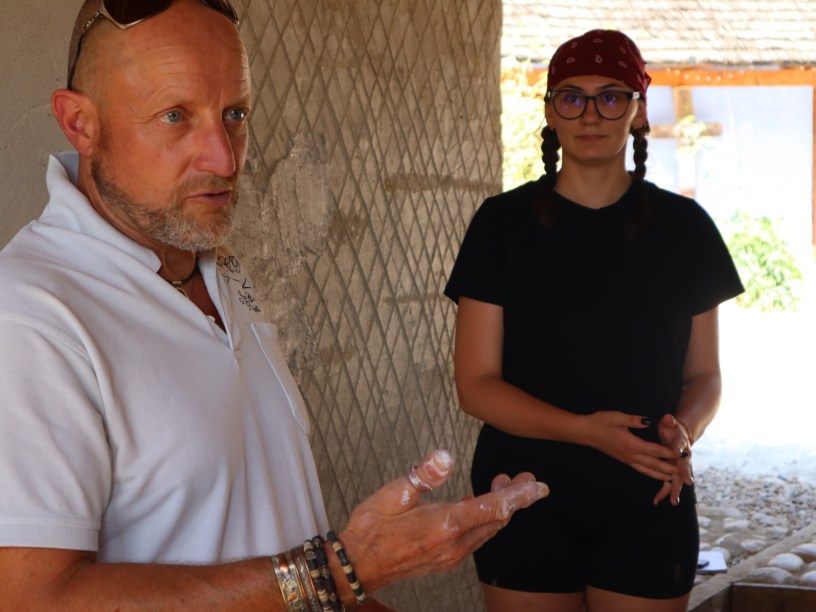
From 10 to 17 August 2025, the quiet village of Bunești in Transylvania became a lively crossroads of tradition and innovation. At the historic Școala de la Bunești in Zărnești, Romania, master craftsman James Collier from the UK led an immersive workshop titled “Introduction to Pargetting”—a centuries-old technique of ornamental plasterwork deeply rooted in English heritage yet little known in Romania.
Organized in collaboration with Școala de la Bunești and INTBAU, and supported by heritage organizations, the event brought together artisans, conservation enthusiasts, and cultural advocates for a week-long journey into craftsmanship. It was not merely a technical course but an act of cultural exchange, underscoring the relevance of traditional skills in a rapidly changing world.
A Hands-On Dialogue with History
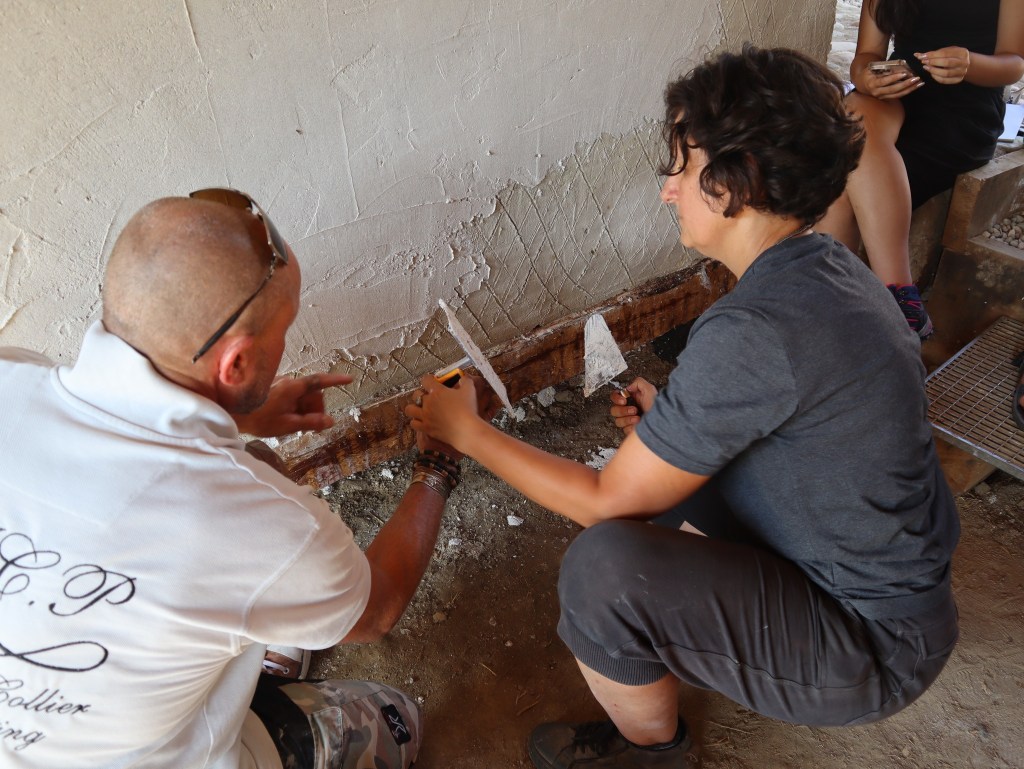
From the first day, the atmosphere buzzed with creative energy. Buckets clinked, trowels scraped, and the earthy scent of lime and sand filled the workshop. Participants mixed quicklime with goat hair, sifted fine aggregates, and shaped intricate motifs into fresh plaster. Under Collier’s guidance, surfaces slowly came alive with curling scrolls and floral reliefs, echoing the ornate façades of Tudor England. Social media chronicled these transformations in real time—images of concentration, collaboration, and joy spreading far beyond the school walls.
But the lessons extended beyond the tactile. Pargetting, once a symbol of status adorning historic English façades, became a shared language between past and present. It invited conversations about sustainability, authenticity in restoration, and the enduring value of manual skill in a digital age. Participants discovered that heritage is not frozen in time; it breathes through the hands of those who practice and preserve it.
The Setting: A Living Classroom
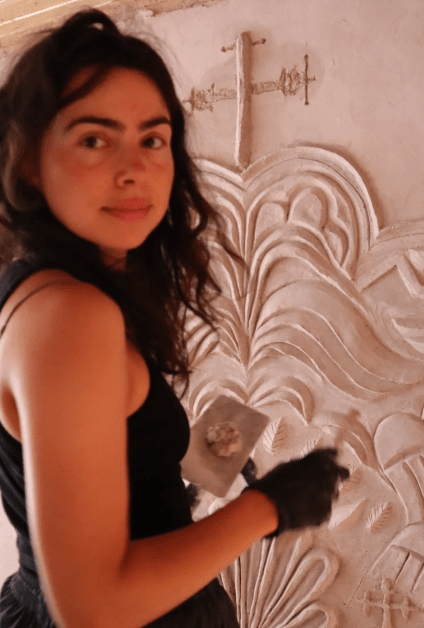
Surrounded by timber-framed barns and weathered stone churches, the workshop unfolded against a backdrop of rural architecture that resonated with the very ideals it sought to protect. Every ornament pressed into wet plaster felt like a bridge—between countries, between centuries. The process demanded patience and precision, qualities often side lined in modern life, yet rewarded with something tangible: walls adorned with ornament, each bearing traces of tradition and individual creativity.
Legacy Beyond the Walls
By week’s end, the school stood transformed—its once-plain surfaces textured with a fusion of historical technique and personal expression. Yet the deeper impact lay beyond aesthetics. James teaching reignited interest in a craft on the edge of disappearance, proving that heritage endures not through monuments alone, but through knowledge passed from hand to hand.
As tools were packed away and lime-streaked hands finally washed, a shared realization lingered: this was more than a summer course. It was an entry into a dialogue with history, a reaffirmation that beauty and authenticity still matter in an age of speed and disposability. James workshop in Bunești was a testament to continuity—a vivid reminder that traditions live not by nostalgia, but through practice, passion, and the curiosity of those willing to learn

 Lath and Plaster