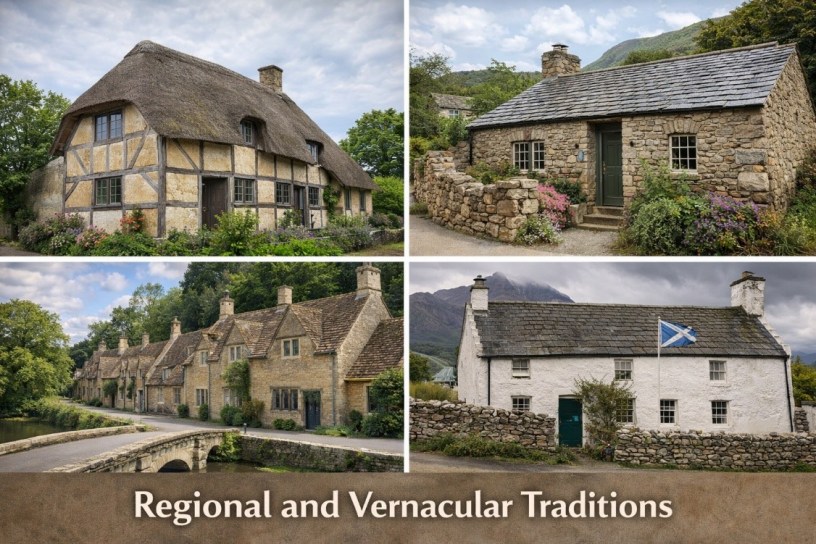
Regional and vernacular traditions are the local ways buildings were designed and built using materials, skills, and knowledge found in a specific area. In the UK, these traditions developed over many centuries. They reflect local climate, landscape, and the materials that were easy to obtain. Vernacular buildings were not designed by architects. They were built by local craftsmen using practical methods passed down through generations.
Different regions of the UK show clear differences in building style. In the south of England, many older buildings use timber frames with wattle and daub panels. This was common where good timber and clay were available. In the Cotswolds, buildings are often made from local limestone, giving villages a warm, honey-coloured appearance. In the north, stone buildings are more common due to the availability of hard stone and the harsher weather.
Scotland has its own strong vernacular traditions. Many traditional buildings use rubble stone walls with lime mortar and lime harling on the outside. Harling helps protect walls from driving rain and cold winds. In Wales, slate is widely used for roofing because it was easy to quarry locally. Thick stone walls helped keep buildings warm in winter and cool in summer.
Plastering and rendering traditions also vary by region. Lime plaster was widely used inside buildings because it allows walls to breathe. Outside, lime render or limewash was often applied to protect walls from weather. In coastal areas, renders were sometimes mixed stronger to cope with wind and salt air. Local sands gave renders different colours and textures.
Vernacular traditions are closely linked to local skills. Builders learned by working with others in their community. Techniques were adapted over time to suit local needs. Repairs were usually done using the same materials as the original building. This helped buildings last longer and reduced damage.
Today, understanding regional and vernacular traditions is important in conservation work. Using modern materials in historic buildings can cause problems such as damp and cracking. Matching traditional materials and methods helps protect the building’s character and performance.
In summary, regional and vernacular traditions show how buildings were shaped by place, people, and materials. They are an important part of the UK’s building heritage and should be respected and preserved.
 Lath and Plaster