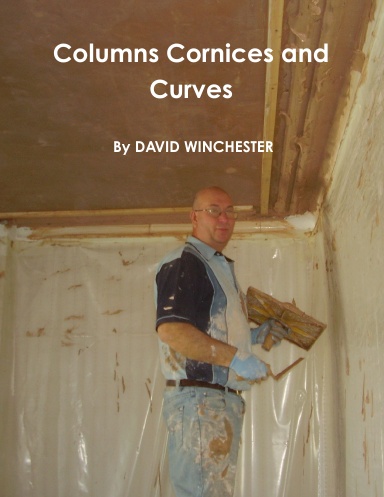
By David Winchester
It was a cold, frosty morning in January 2010 when life quite literally knocked me off my feet.
On my way to work, I asked my wife to drop me off outside the local ASDA—right across the road from the college where I taught—so I could grab some cash. Nothing unusual. But as I walked across the car park, I didn’t realize the surface was covered in black ice. One wrong step, and I was down.
Now, I’m a big guy—17 stone—and when someone my size hits the ground, there’s usually only one outcome: broken bones. I ended up in hospital with a broken ankle and wrist, both on my left side. I left with plaster casts stretching from toes to knee and from fingers to elbow.
Stuck on the Sofa with an Idea
By day two of recovery, I was already climbing the walls. Six weeks in plaster was ahead of me. My wife, sensing my restlessness, asked, “What are you going to do now?”
Without missing a beat, I said, “I’m going to write a book.”
She laughed. “You’ve never written one before!”
“True,” I said. “But it’s about time I did.” I figured I had a creative mind, decent computer skills—and okay, I’m rubbish at spelling. But as Meat Loaf once said, “Two out of three ain’t bad.”
Why a Plastering Book?
At that point, I’d been teaching full-time for seven years. One thing I’d noticed? Most plastering books weren’t designed with modern students in mind. They were packed with dense text and old-fashioned hand-drawn diagrams. Even I struggled to understand them sometimes.
That gave me an idea: why not create a plastering book that students could actually connect with? Something visual, straightforward, and accessible.
So, stuck on the sofa, surrounded by plastering books and my laptop, I got to work. By the time the casts came off, I had a solid draft of my first book: Columns, Cornices and Curves.
Testing It in the Real World
As the Level 3 exams approached, I used a sneaky method to test my new book. During revision sessions, I laid out various plastering books—including several copies of my draft—and let students pick which ones to use.
To my surprise, they kept choosing mine.
“This one’s easier to understand,” they said.
I shared copies with other colleges. Same feedback.
At that point, I knew I had something worth publishing.
Publishing? Easier Said Than Done
I sent the manuscript to every publishing house I could find in the UK. The replies were polite but repetitive: “We like the manuscript. There’s a gap in the market. But no, thanks.”
Eventually, one educational publisher showed interest. My wife and I went to meet them. Exciting, right? Not quite. They offered £3,000 and wanted full rights and all royalties. No thanks.
The Self-Publishing Route
After chatting with a friend, he suggested self-publishing. At first, the idea of doing everything myself seemed overwhelming—but then I found Lulu, a self-publishing platform in the US. Their website was user-friendly, and though I was skeptical at first, I’ve now been with them since 2013. They’ve never missed a royalty payment.
DIY Marketing & Building My Website
The next problem? Marketing. Plastering websites wanted silly amounts of money for ads—more than I’d make in sales. So I thought, Why not build my own website?
After a few YouTube tutorials, I figured out the basics. I thought, If I wanted to find plastering books, what would I type into Google? Probably “Plastering Books.”
I searched for the domain. To my amazement, http://www.plasteringbooks.com was available.
I bought it. Within an hour, I had a very basic (but functioning!) website live. I went to bed that night buzzing—I’d built a site and could now sell my books directly.
I eventually closed the site, but my books are still available via Lulu, and they’re linked on the Plastering Books page in this magazine.
Where It Stands Now
Since then, I’ve written two more books:
- Plasterwork Decorative Mouldings
- Plastering: Basic Plastering Skills


They continue to sell all over the world. Some readers love them, others not so much—but that’s the nature of publishing. The only downside to self-publishing is that prices are set by the platform, so paperback versions can be a bit pricey.
But I’m proud of what I’ve created.
From a slip in an icy car park to becoming a self-published plastering author—it’s been one wild, unexpected journey.
And hey, like Meat Loaf said: “Two out of three ain’t bad.”
 Lath and Plaster