By Mick Hargreaves
Plastering trowels have been essential tools for centuries, shaping the walls and ceilings of homes, churches, and great halls across Britain. The question of which company first sold plastering trowels in the UK is not straightforward. Before the rise of industrial tool brands, these implements were the domain of local smiths and small workshops. Few printed records exist from this period, so early trowel production remains shrouded in practical necessity rather than commercial documentation.

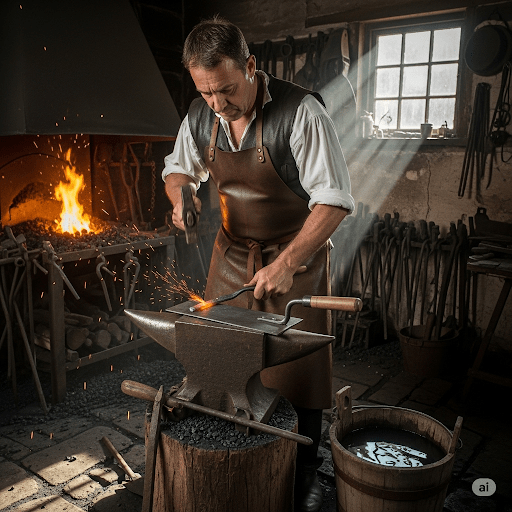
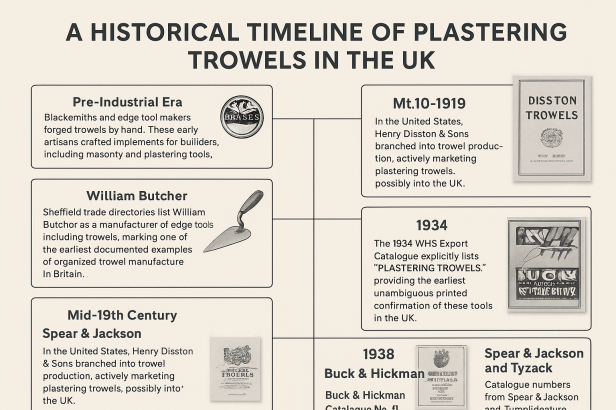
Before industrial manufacturing, blacksmiths and edge tool makers forged trowels by hand. These early artisans crafted implements for builders, including masonry and plastering tools. This period left few documented records, but it laid the foundation for later industrial production.
The earliest industrial connection emerges with William Hunt and Sons, later known as WHS, founded around 1793 in Birmingham. WHS built its reputation on edge tools including mason and builder tools. While it is unclear if plastering trowels were among their first offerings, they played a pioneering role in the trade. By the early twentieth century, WHS was manufacturing specialized plastering trowels under its Brades and WHS marks.
By 1825, Sheffield trade directories list William Butcher as a manufacturer of edge tools including trowels.
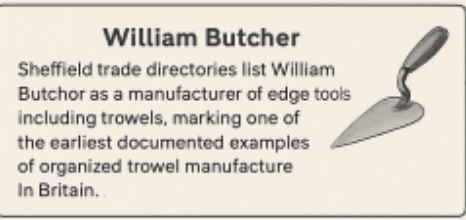
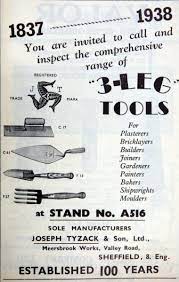
Although this reference does not specifically identify plastering trowels, it marks one of the earliest documented examples of organized trowel manufacture in Britain beyond local blacksmith work. The mid-nineteenth century saw the growth of Sheffield and Birmingham tool trades. Spear and Jackson, founded in 1760, expanded into builders’ tools, while Joseph Tyzack and Son emerged as specialists. By the late nineteenth century, Tyzack became known for steel plasterers trowels, replacing earlier wooden or hybrid designs.
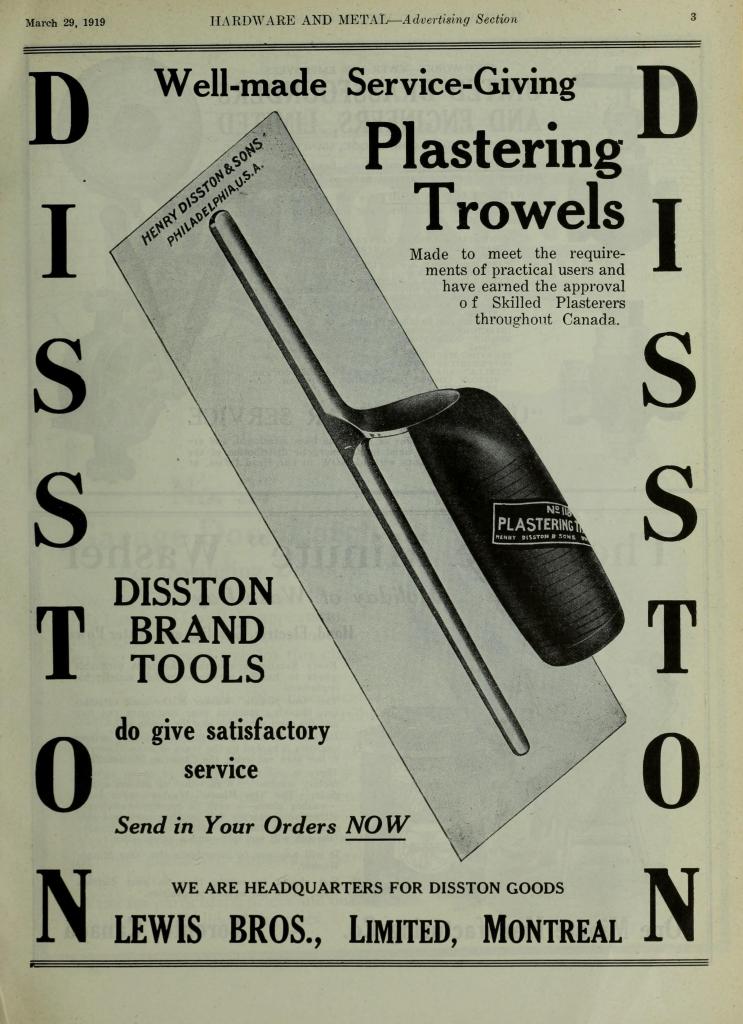
In the early twentieth century, Henry Disston and Sons in the United States branched into trowel production. By 1910 to 1919, Disston issued dedicated trade booklets showing plastering and brick trowels. These catalogues prove that Disston actively marketed these tools, possibly into the UK through distributors such as Buck and Hickman or Rollins and Sons.
By the interwar years, plastering trowels were firmly established in industrial supply chains. The 1934 WHS Export Catalogue explicitly lists plastering trowels, providing the earliest unambiguous printed confirmation of these tools in the UK. By 1938, Buck and Hickman Catalogue No 11 included plasterers tools under masonry trades, highlighting the role of major distributors. Spear and Jackson and Tyzack catalogues from 1939 and 1940 feature multiple plasterers trowels, including Tyzacks Centenary Trowel. By this period, plastering tools had become standardized products with identifiable brands, steel blades, and wooden handles.
After World War Two, brands such as Marshalltown, WHS, and Tyzack continued refining plastering trowels with stainless steel blades, synthetic handles, and ergonomic improvements. UK distribution through Buck and Hickman, Rollins, and similar wholesalers made these tools widely available on building sites.
Despite extensive research, no definitive record names a single first company to sell plastering trowels in the UK. The trade evolved from local smiths to industrial suppliers over a century. Based on available evidence, the earliest documented UK maker linked to trowels is William Butcher in 1825. The earliest confirmed UK brand marketing plastering trowels by name is WHS in 1934. Key influencers include Spear and Jackson, Joseph Tyzack and Son, and Buck and Hickman as a major distributor by the 1930s. Disston in the United States was an important international contributor, actively promoting plasterers trowels by the 1910s.
The story of the plastering trowel is one of gradual specialization. From hand-forged blades in village smithies to polished steel tools in glossy catalogues, the humble trowel reflects the professionalization of the plasterers trade. While WHS and Spear and Jackson stand as the most credible early UK suppliers and Disston drove innovation abroad, the true first seller may remain lost in the anonymity of eighteenth century blacksmith shops.
 Lath and Plaster