It was a cold, frosty morning in January 2010. I was on my way to work at the college, which happened to be opposite the local ASDA. My wife, who drove me to work, dropped me off there so I could withdraw some cash from the machine. After collecting my money, I started walking to the college, cutting across the car park. Although it was a frosty morning, the ground didn’t look particularly slippery. However, hidden beneath the surface was a layer of black ice.
Within minutes, I slipped and went down hard. Now, at 17 stone, when someone my size falls, there’s usually only one outcome—broken bones. Sure enough, I broke both my ankle and my wrist. I was rushed to the hospital and returned home with plaster casts—one from my toes to my knee and another from my fingers to my elbow, both on my left side.
On the second day of my recovery, frustration was already setting in. With six long weeks in plaster casts ahead of me, my wife asked, “What are you going to do now?” I replied, “I’m going to write a book.” She laughed and said, “How are you going to do that? You’ve never written one before.” My response? “Well, it’s about time I did.”
I figured, how hard could it be? I had a creative mind and computer skills—spelling wasn’t my strong suit, but as Meat Loaf once sang, “Two out of three ain’t bad.”
The Inspiration Behind the Book
By 2010, I had been a full-time teacher for seven years. One thing I noticed was that there wasn’t a plastering book that today’s students could truly relate to. The available books were informative but text-heavy, with hand-drawn illustrations that even I struggled to understand—let alone my students. That’s when it hit me: I could rewrite the older plastering books into a more student-friendly version. After all, I was a plastering lecturer, and most of the classic plastering books had been written by lecturers from previous generations.
Since I couldn’t get upstairs at home, I took up residence on the sofa, surrounded by my laptop and stacks of plastering books. By the time my plaster casts were due to come off, my book had started taking shape. By the time I returned to work, I had a draft copy of my first book, Columns, Cornices, and Curves.
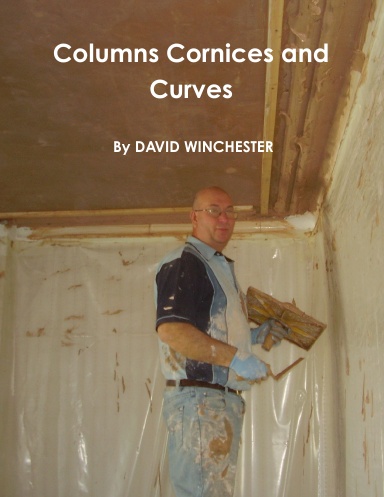
As the Level 3 exams approached, my students spent lessons revising. I would write questions from the syllabus, put out a selection of plastering books, and let them research the answers—often working in teams. Among the books, I placed several draft copies of Columns, Cornices, and Curves without telling them I had written it. I watched carefully to see which books they chose for their research. To my surprise, they repeatedly picked my book. When I asked why, the response was simple: “This book is really easy to understand.”
Encouraged, I sent draft copies to other colleges and received the same positive feedback.
The Challenges of Publishing
Clearly, I had written a book that needed publishing. But how? I decided to send my manuscript to publishing houses across the UK. The responses were similar: “Great book, definite gap in the market… but sorry, we don’t think it will generate enough sales.”
Eventually, one educational publishing house showed interest and invited me to a meeting. My wife and I went in feeling excited, only to leave feeling deflated. Yes, they would publish the book, but they were only offering £3,000—and they wanted exclusivity over all the royalties.
I knew from my feedback that there was demand for this book, so I had to find another way. A friend suggested I look into self-publishing. Initially, the idea of handling everything myself felt overwhelming, but I soon discovered Lulu, a US-based self-publishing platform. I was skeptical at first—could I trust them? Would they pay out my royalties? But I took the leap, and I’ve been with them since 2013. They’ve never let me down.
Building My Own Platform
The next challenge was marketing. Plastering websites wanted more money for advertising than I could afford. That led to a lightbulb moment: Why not build my own website and sell my books directly?
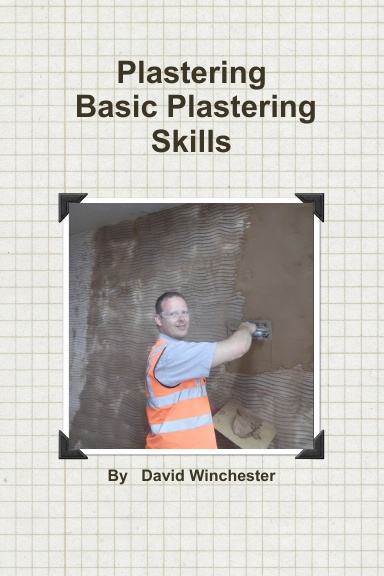
By then, I had written two more books—Plasterwork Decorative Mouldings and Plastering: Basic Plastering Skills. Determined to learn, I turned to YouTube, one of the greatest inventions of the modern age. After watching a few tutorials, I learned how to build a website.
The first step was choosing a domain name. I asked myself, If I were looking for a book on plastering, what would I type into Google? The answer was simple: Plastering Books. I searched for that domain and found it available—within minutes, I bought http://www.plasteringbooks.com, and within an hour, I had a basic website up and running.
It was primitive, but it worked. I went to bed that night feeling accomplished—I had built a website where I could sell my books directly. Though I eventually closed down the website, my books are still available on Lulu, linked through the Plastering Books section of this magazine.
The Journey Continues
Since then, my books have sold worldwide. Some people love them, others don’t—but that’s the nature of self-publishing. The downside is that pricing is controlled by the publishing platform, meaning paperback versions can be quite expensive. However, my goal was never just about sales—it was about making plastering education more accessible.
Looking back, it’s amazing to think that a single slip on the ice led to an entirely new chapter in my career. Sometimes, the setbacks we face open doors we never expected.

 Lath and Plaster